What Will I Look Like When I’m Older? Try AI Aging
By Maria · 2026-08-13
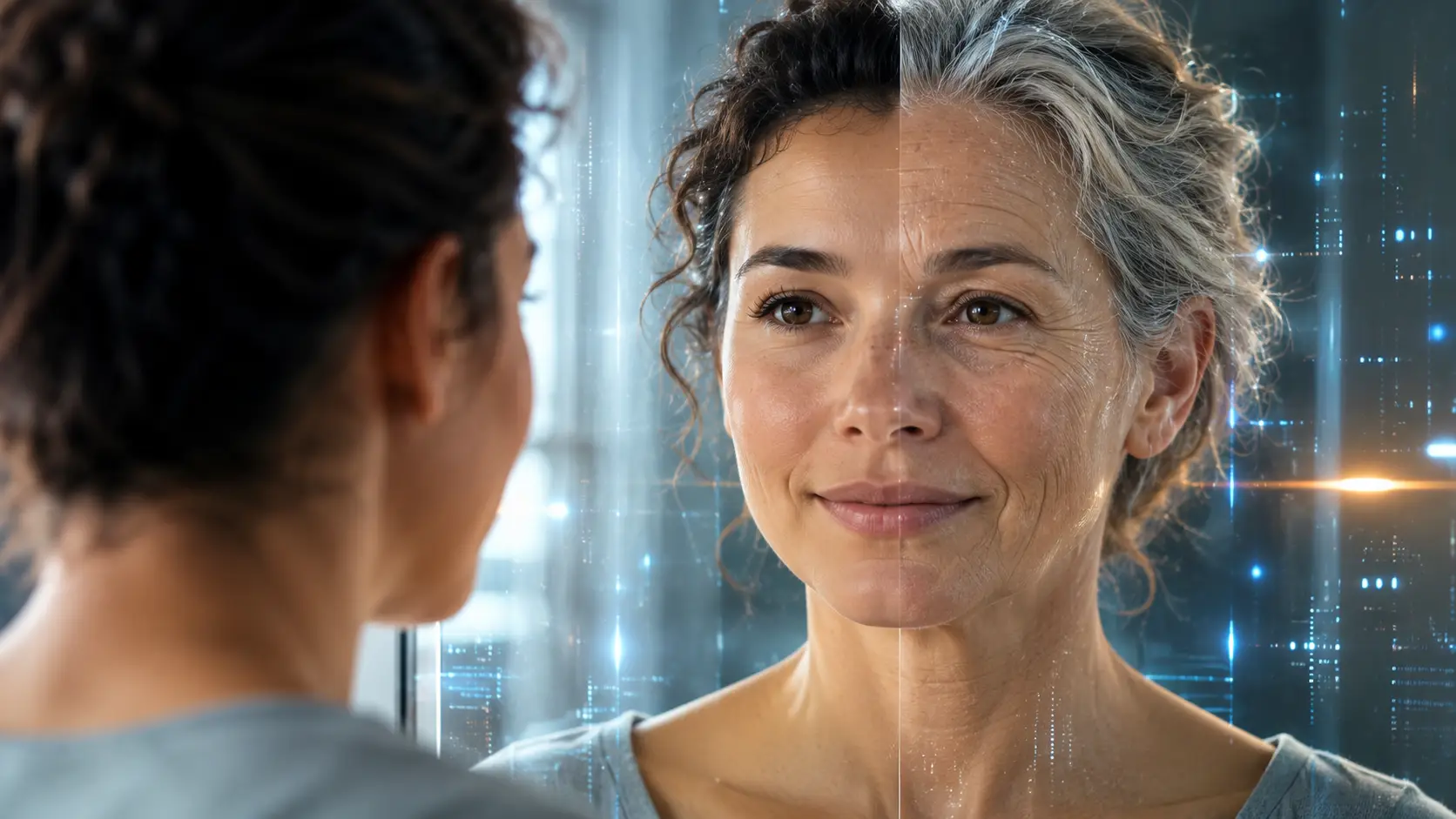
Curious about your future self? Learn how AI aging works, what affects the results, and how to create a realistic older version of yourself with Betatum.
Have you ever caught a familiar expression in the mirror and suddenly seen one of your parents in your own face, or looked through an old family photo and wondered whether you will still have the same smile decades from now? AI aging turns that everyday curiosity into something visual by creating an older-looking version of your current face in seconds.
The result is not a guaranteed picture of your future, but it can offer an interesting glimpse at how features such as skin texture, facial contours, hair and other age-related details might change over time. In this guide, you’ll learn how AI aging works, what it can and cannot predict, how to choose the right photo, how to generate a more believable age-progression result and how to use that result responsibly.
Summary
AI aging creates a visual simulation of how your face might change over time by adjusting features such as skin texture, facial contours, and hair. The quality and clarity of your starting photo can affect how natural the result looks. However, even a realistic image represents only one possible version of your older self—not an exact prediction of how you will actually age.
Can AI Really Predict What You’ll Look Like When You’re Older?
AI age progression can create a possible version of what you may look like in 10, 20, or even 40 years. It analyzes visible features in your current photo, such as face shape, skin, hair, and facial proportions, then applies age-related changes based on patterns it has learned.
However, your future appearance depends on much more than what can be seen in one photo. Genetics, health, sun exposure, weight changes, lifestyle, and countless experiences over time can all influence how your face ages.
For that reason, even a highly realistic AI result should be viewed as one plausible interpretation of your older appearance rather than an exact forecast.
How Does AI Aging Turn One Photo Into Your Future Self?
AI aging starts by finding your face and the main areas it needs to work with, such as your skin, eyes, hair, jawline and expression. It then looks at the visible features in your photo and adds changes that are commonly linked with getting older, such as fine lines, changes in skin texture, gray hair or softer facial contours. After that, the system creates a new image while trying to keep the features that make you look like you, including the overall shape of your face, your eyes and other recognizable details.
That last part is harder than it sounds. Making a face look older and keeping it recognizable as the same person are two different challenges. An image may show believable signs of aging but still change the face too much. This is why identity preservation remains an important area of research in AI age progression. A good result should not only look older; it should still feel like an older version of the original person.
What Usually Changes When a Face Gets Older?
As we get older, different parts of the face can change in different ways. AI aging tools try to copy some of these common patterns, but the result will not be the same for everyone.
Facial Area | Changes AI May Simulate | Why the Real Result May Differ |
|---|---|---|
Skin | Fine lines, wrinkles, spots and changes in texture | Sun exposure, genetics and skincare habits vary |
Facial contours | Less fullness or softer definition | Weight and natural face structure affect how the face changes |
Hair | Gray hair, thinning or changes to the hairline | Hair aging can be very different from one person to another |
Eyes | Fine lines, heavier lids or changes under the eyes | Sleep, health and natural facial structure can affect this area |
Lower face | A softer jawline or changes around the mouth | Weight, dental structure and muscle tone vary |
Brows and facial hair | Thinner brows or gray facial hair | Grooming choices can completely change the final look |
These changes help AI create an older-looking face, but they are only visual possibilities. Two people of the same age can look very different because aging does not follow one fixed pattern.
Why AI Cannot Know Exactly How You Will Age
AI can work with the face it sees today, but it has no way to know what will happen to you over the coming decades. Aging is shaped by a combination of genetics, environment, habits, health, and physical changes over time.
Genetics Do Not Tell the Whole Story
Looking at your parents or grandparents may offer clues about features you could share as you age, including facial structure, hair patterns, or skin characteristics. However, even close relatives can age very differently.
Differences in lifestyle, health history, diet, sun exposure, and daily habits can all affect appearance, so family resemblance alone cannot determine how your face will change.
Sun Exposure Can Change How a Face Ages
Sun exposure is one factor that can significantly affect visible aging. Research has estimated that UV exposure may contribute to around 80% of visible facial aging signs, including wrinkles and changes in pigmentation.
Someone who spends years regularly exposed to the sun may therefore develop different visible aging patterns from someone with much lower exposure.
Lifestyle and Physical Changes Matter
Your appearance can also change because of factors that develop throughout your life, including:
Smoking
Nutrition
Stress
Sleep
Weight changes
Air pollution
Skincare habits
Health conditions
Hormonal changes
A systematic review of skin-aging research has identified factors such as age, gender, ethnicity, air pollution, nutrition, smoking, and sun exposure as contributors to visible skin aging.
These variables help explain why two people with similar facial features today may look very different decades later.
What Makes an AI Aging Result Look Convincing?
A realistic AI aging result is not just a face with more wrinkles. The best results still look like the same person, only older. A quick way to judge the image is to check whether the AI has aged the face without changing the person’s basic identity or creating strange details.
A convincing result should:
Keep the original eye shape and spacing
Preserve the basic proportions of the face
Keep the smile and expression recognizable
Apply aging changes evenly across the face
Match the skin texture to the selected age
Blend gray hair, thinning and hairline changes naturally
Keep the original direction of light and shadow
Avoid changing ethnicity or unrelated facial features
Keep the neck and hands reasonably consistent with the face when they are visible
Avoid warped teeth, earrings, glasses or background objects
The easiest test is to ask two questions: Does this person still look like me, and do the aging changes make sense together? If the face has realistic wrinkles but the eyes, jawline, smile or other key features have changed too much, the result may look older without being a believable version of you.
Start With a Photo the AI Can Actually Read
The quality of your starting photo has a major effect on how natural the final AI aging image looks. A clear, well-lit face gives the tool more useful visual information to work with, while blurry, filtered, or partially covered faces can lead to distorted or inconsistent details.
Better Starting Photo | More Difficult Photo |
|---|---|
One clearly visible face | Group photo |
Front-facing or slightly angled | Strong side profile |
Even, natural lighting | Harsh shadows or colored lighting |
Neutral or natural expression | Exaggerated expression |
Sharp eyes and facial details | Blurry or pixelated face |
Minimal beauty filters | Heavily filtered selfie |
Hairline and jaw clearly visible | Face covered by hair, hands, or accessories |
Simple background | Busy background crossing the face |
No sunglasses | Sunglasses or reflective glasses |
A better photo improves visual quality, not the accuracy of the prediction.
How to See Your Older Self With Betatum AI
You don’t need technical editing skills to create a possible older version of yourself with Betatum AI . The process is simple, but choosing the right photo and checking the result carefully can make the final image look much more natural.
1. Prepare and Upload the Right Photo
Start with a clear, front-facing or slightly angled portrait. Your face should be well lit, easy to see and free from heavy beauty filters. Avoid sunglasses, hands, hair or accessories that cover important facial details.
A cleaner starting image gives the AI more useful information about your eyes, face shape, skin and hair, which can help produce a more believable result.
2. Adjust the Aging Slider
Once your photo is uploaded, move the age slider to explore different stages of life. Instead of stopping at the first result, try several settings and compare how your face changes as the selected age increases.
You can also move the slider in the opposite direction if you want to explore a younger-looking version of yourself.
3. Check Whether It Still Looks Like You
A convincing AI aging result should not simply add wrinkles and gray hair. Look past the obvious aging effects and check your eyes, smile, face shape and overall proportions.
Ask yourself: Does this still feel like the same person, just older?
If important features have changed too much, try another age setting or a different starting photo.
4. Compare the Before and After
Use the before-and-after view to look more closely at what changed. Check areas such as the skin, hairline, facial contours, eyes and teeth.
Watch for details that look unnatural or distorted. If the aging effect feels too strong, adjusting the slider may give you a more balanced older version.
5. Save and Use the Result Responsibly
When you find a version you like, save the image for comparison, creative projects or simply to satisfy your curiosity.
Only upload photos you are comfortable processing and review the platform’s privacy information if you want to understand how uploaded images are handled.
Why Two AI Aging Tools May Give You Different Faces
If you upload the same photo to two AI aging tools, you may get two noticeably different versions of your older self. That does not automatically mean one result is right and the other is wrong. Each tool may have been trained on different images, use different age ranges, and handle facial details in its own way.
Some tools may add stronger wrinkles, while others focus more on changes in hair, skin texture, or facial volume. They may also differ in how carefully they preserve your original face shape, eyes, smile, and other identity-related features.
Other reasons results can vary include:
Different training datasets
Different ways of grouping or defining ages
Different methods for keeping the face recognizable
Different treatment of gray hair, hair loss, and facial volume
Small random differences during image generation
Different interpretations of makeup, lighting, or facial hair
Uneven representation of certain ages, skin tones, or facial characteristics in training data
Research in age-editing technology is still working on making age changes more precise while keeping the person’s identity consistent. Separating the features that make someone look older from the features that make them look like themselves is still a difficult part of the process.
More Meaningful Ways to Use an AI Aging Photo
AI aging can be more interesting when you use it for something personal, creative or reflective rather than just as a quick joke or viral post. Since the image is only a possible version of your future appearance, it works best as a prompt for ideas, memories and storytelling.
Here are a few ways to use it:
Create a future-self journal: Add your aged image to a journal entry about where you hope to be in 10, 20, or 30 years and what you want your future life to look like.
Build a decade-by-decade portrait: Generate several age stages and place them side by side to create a visual timeline of how your appearance might change over time.
Start a family conversation: Compare your AI-aged result with photos of parents or grandparents and talk about the facial features or expressions you may share across generations.
Age a fictional character: Use AI aging to explore how a character might look later in life while keeping recognizable features consistent for storytelling, film, or creative projects.
Add your future self to a vision board: Use the image as a visual reminder of long-term goals, priorities, or the kind of life you hope to build.
Create a before-and-after social post: Place your current photo beside the AI-aged version for a fun comparison, while making it clear that the older image is AI-generated.
The most useful approach is to treat the image as a creative starting point, not as a real future portrait. It should not be used to create deceptive profile photos, fake identity documents or professional images that could mislead other people.
Can Seeing Your Future Self Change What You Do Today?
Seeing an older version of yourself may do more than satisfy curiosity. It can make the person you might become feel a little more real.
A 2011 study explored this idea by showing participants age-progressed versions of themselves and examining whether that experience affected decisions about the future. Across four controlled studies, people who interacted with virtual versions of their older selves showed a greater tendency to choose later financial rewards over immediate ones.
An NYU Stern summary of the research reported that working-age adults who saw age-progressed images of themselves increased their retirement-saving allocations by 33%.
Researchers connect this idea with future-self continuity: when your older self feels like a real continuation of who you are today, future-focused choices may feel more relevant.
That does not mean seeing yourself with gray hair through an AI aging tool will suddenly change your habits. The study took place in a controlled research setting and used specific interactive experiences, so its findings should not be treated as proof that every aging filter will influence behavior.
Still, there is an interesting idea behind it. An AI aging photo does not have to be only about asking, “What will I look like when I’m older?” It can also make you pause and think about the person behind that future face: what you hope will stay the same, what might change and what kind of life you would like that older version of yourself to have.
Final Verdict
AI aging can offer an interesting glimpse at how your appearance might change over time, especially when you start with a clear photo and compare several age stages. The most convincing result should preserve the features that make you recognizable while applying age-related changes naturally.
Curious whether your smile, eyes, or face shape will still feel familiar decades from now? Upload a clear portrait to Betatum AI Age Progression, adjust the age slider, and explore your possible future self.