
Studio vs Lifestyle Product Photos: Which Sells Better?
By Maria · 2026-09-11
Studio vs lifestyle product photos: learn which sells better, when each works best, and how to build a gallery that helps shoppers decide
The same product can look completely different in a clean studio setup and in a real-life setting. But when it comes to studio vs lifestyle product photos, neither style is automatically better at selling.
Studio photos are usually better at answering questions about the product itself—its shape, color, details, and features. Lifestyle photos do something different: they help shoppers picture how the product looks, feels, or works in real life.
That matters in ecommerce. Salsify’s 2025 consumer research found that 77% of 1,910 surveyed shoppers considered product images and videos extremely or very important when deciding whether to complete a purchase.
So the real question is not simply which style sells better. It is: Which image style answers the shopper’s most important question at that moment?
Summary
This guide compares studio and lifestyle product photography based on what shoppers actually need to understand before buying. You’ll learn when studio images are better for clarity and comparison, when lifestyle photos help with scale, fit, and real-life use, how product category and sales platform can change the best choice, and how to combine both styles into a product gallery that answers buying questions in the right order.
Studio vs Lifestyle Product Photography: What’s Actually Different?
The biggest difference between lifestyle and studio product photography is what surrounds the product and what that setting helps the shopper understand.
Studio product photography is shot in a controlled environment. Lighting, background, product position, and other visual elements can be adjusted carefully, which makes the product easier to see and keeps images consistent across a product range.
Lifestyle product photography puts the product into a realistic or styled setting. It might show a chair inside a living room, a bag being carried, or cookware being used in a kitchen. The goal is to give shoppers more context about how, where, or by whom the product may be used.
It is also worth separating studio photography from white-background photography. They are not the same thing. A white background is simply one studio setup; studio photos can also use colored backdrops, shadows, props, or other controlled styling.
Factor | Studio Photography | Lifestyle Photography |
|---|---|---|
Main purpose | Show the product clearly | Show the product in context |
Environment | Controlled | Realistic or styled |
Product detail | Usually easier to inspect | Can be less obvious within the scene |
Scale | Often harder to judge on its own | Easier to understand with nearby objects or people |
Consistency | Easier to standardize | Harder to keep identical across many images |
Best use | Comparison and evaluation | Visualization and real-life use |
Main risk | May leave shoppers without enough context | The setting can distract from the product |
Neither format is simply “better.” Studio photos make the product easier to inspect, while lifestyle photos make it easier to picture in real life.
Which One Sells Better? Start With What the Shopper Still Doesn’t Know
Neither studio nor lifestyle photography sells better in every situation. Studio photos usually have the advantage when shoppers need to examine and compare the product, while lifestyle photos become more persuasive when shoppers need to understand how the product will look, fit, or work in real life.
The reason is simple: shoppers hesitate when an important question is still unanswered. Sometimes that question is about the product itself—its material, color, size, finish, features, or what is included. In other cases, the product is already clear, but the shopper cannot picture what it will be like to own or use it.
That gives us two different types of buying uncertainty. The first is product uncertainty: “What exactly am I buying?” The second is context uncertainty: “What will this product be like in real life?” The image style that removes the more important uncertainty is usually the one doing more work toward the sale.
When the Question Is “What Exactly Am I Buying?” Studio Usually Wins
Studio photography is strongest when the shopper needs an accurate, distraction-free view of the product.
A controlled setup makes it easier to show the product from useful angles and keep important details visible. Shoppers can inspect the shape, material, texture, finish, color, controls, packaging, included components, and small design details without other objects in the scene pulling attention away.
This matters most for products where small differences can affect the buying decision. Someone comparing two watches may want to examine the dial, strap, clasp, case, and finish. A shopper choosing electronics may need to see ports, buttons, connections, or what comes in the box. With tools, accessories, packaged goods, and similar products, buyers may be comparing several options side by side and looking for specific differences.
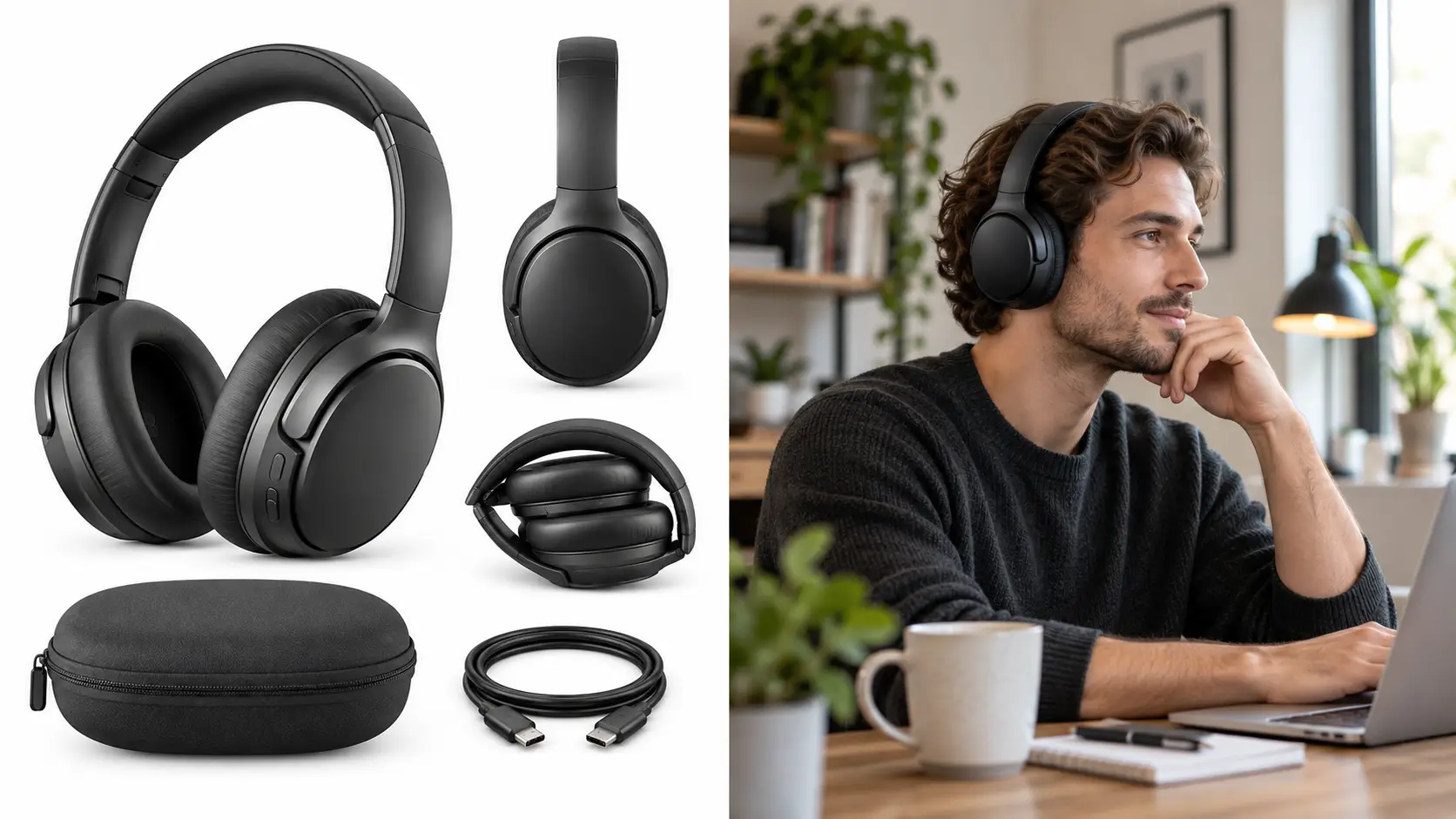
In those situations, lifestyle scenery can sometimes make the image less useful. A beautifully styled desk may make a pair of headphones look appealing, for example, but it can also make it harder to inspect the ear cups, controls, headband, and connections. If those details are what the shopper needs before making a decision, the cleaner studio image is more valuable.
Product images also tend to get attention early. Baymard Institute found in its product-page usability testing that 56% of users began by exploring product images after arriving on a product page. This does not prove that studio photography produces higher conversion rates. What it does show is that shoppers often expect images to answer their questions quickly.
That is why studio photography can be particularly effective during product comparison and evaluation. When shoppers are asking “What exactly do I get, and how is this different from the other options?”, clear product-focused images give them the information they need with less effort.
When the Question Is “What Will This Look Like in My Life?” Lifestyle Becomes More Valuable
Studio images become less effective when the shopper’s main question cannot be answered by looking at the product alone.
A furniture shopper may be able to see the shape and color of a sofa perfectly in a studio photo but still have no clear sense of how large it will feel in an average living room. A necklace may look detailed and attractive on its own, yet the shopper may still wonder where it sits on the neck or how noticeable it looks when worn.
Lifestyle photography fills these gaps by giving the product a useful reference point.
Furniture shown inside a room helps shoppers judge its scale and the amount of space it occupies. Jewelry shown on a person makes its size and fit easier to understand. A backpack worn on the body shows how large it looks in relation to the wearer and where it sits on the back. Cookware shown during use can make capacity and handling clearer. Sports equipment shown in action can demonstrate how the product is held or used.
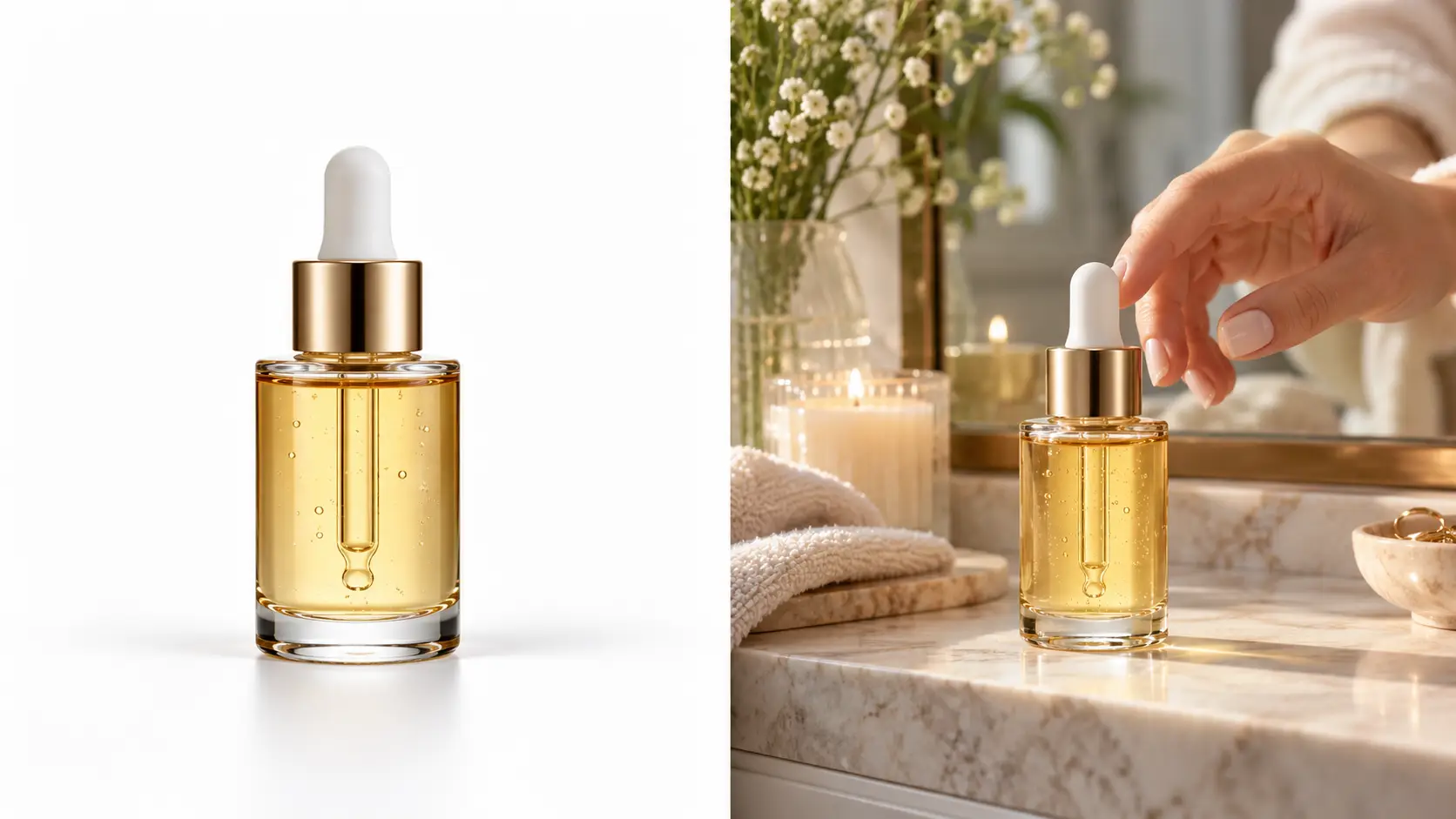
The same principle applies even to products where the setting may seem less important. A skincare bottle on a plain background clearly shows the packaging, but placing it naturally on a bathroom shelf can help shoppers understand its size and how it fits into a normal routine.
This is the real value of lifestyle photography. It is not simply that lifestyle images are more emotional or that they “tell a story.” A useful lifestyle image provides information about context, scale, fit, or use that would be difficult to communicate through a product-only image.
That also means lifestyle photos need to be chosen carefully. A scene filled with attractive props may look impressive but add little if none of those elements help the shopper understand the product. The setting should answer a buying question, not compete with the item being sold.
So, which sells better? Studio photography is usually stronger when the sale depends on understanding the product clearly. Lifestyle photography is stronger when the sale depends on imagining the product in real life.
For many ecommerce products, the strongest approach is not choosing one and rejecting the other. It is using each image style for the question it answers best: studio photos for product certainty, then lifestyle photos for real-world context.
Lifestyle Photos Can Solve a Problem Studio Photos Often Leave Behind: Scale
Studio photos can show a product clearly, but they do not always make its size easy to judge. Baymard found that 42% of users tried to understand product size from product images, and this became harder when the images lacked familiar reference points.
Take a side table as an example. Photographed alone against a clean background, shoppers can see its shape, finish, and details. But place the same table next to a bed, chair, lamp, or laptop, and its size becomes much easier to understand.
Familiar objects give shoppers something to compare the product with. That can be especially useful for furniture, bags, speakers, appliances, beauty products, and other items where size affects the buying decision.
As one Baymard test participant put it: “If it was in context, it would be helpful.”
In-scale photography and lifestyle photography are not exactly the same. An in-scale image is specifically designed to show size, while a lifestyle image may also show use, setting, or fit. But a well-planned lifestyle photo can often do both. For products where size matters, include at least one image with a clear visual reference instead of relying on dimensions alone.
More Context Isn’t Always Better
Lifestyle photos are not automatically better just because they include a room, model, or props. The setting should help shoppers understand the product—not distract from it.
Too many props can pull attention away from the item, make the product look too small in the frame, or even create confusion about what is included. Lighting and perspective can also change how shoppers perceive color or scale.
Etsy’s photography guidance makes a similar point: props can add useful context, but they should not distract shoppers or make it unclear what is actually being sold.
A simple rule works well: A lifestyle scene should add information, not visual noise.
If an element does not help explain the product’s scale, fit, use, or setting, it probably does not need to be there.
The Product Category Can Change the Winner
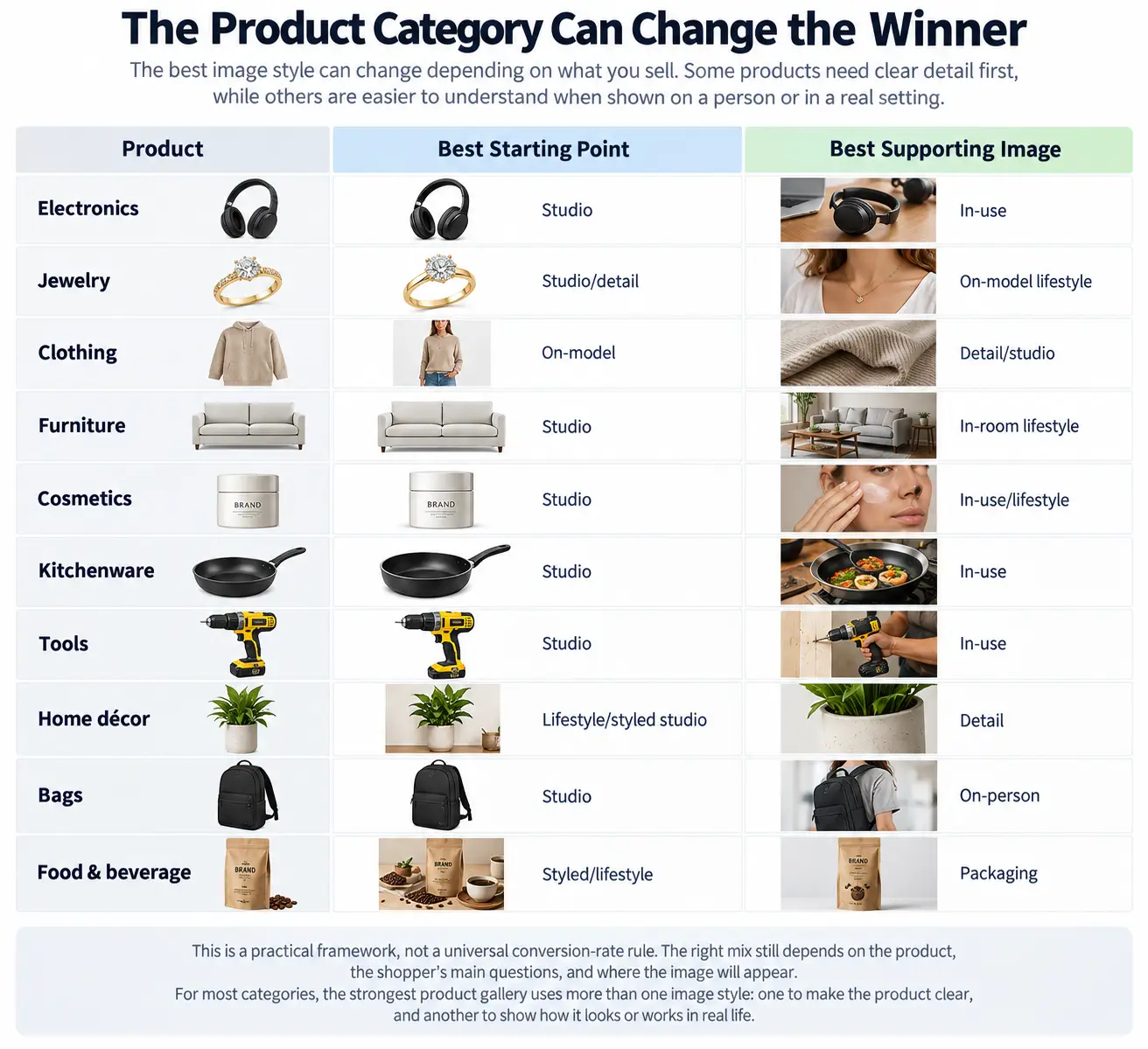
The best image style can change depending on what you sell. Some products need clear detail first, while others are easier to understand when shown on a person or in a real setting.
Product | Best Starting Point | Best Supporting Image |
|---|---|---|
Electronics | Studio | In-use |
Jewelry | Studio/detail | On-model lifestyle |
Clothing | On-model | Detail/studio |
Furniture | Studio | In-room lifestyle |
Cosmetics | Studio | In-use/lifestyle |
Kitchenware | Studio | In-use |
Tools | Studio | In-use |
Home décor | Lifestyle/styled studio | Detail |
Bags | Studio | On-person |
Food & beverage | Styled/lifestyle | Packaging |
This is a practical framework, not a universal conversion-rate rule. The right mix still depends on the product, the shopper’s main questions, and where the image will appear.
For most categories, the strongest product gallery uses more than one image style: one to make the product clear, and another to show how it looks or works in real life.
Where You Sell Can Matter as Much as What You Sell
The right mix of studio and lifestyle product photos also depends on where the product is being sold. Marketplaces have their own image rules, while independent stores usually give brands much more freedom.
Amazon: Compliance Comes Before Creativity
On Amazon, the main image has a clear job: show exactly what is being sold.
Amazon currently requires main product images to use a pure white background (RGB 255, 255, 255), with the product filling roughly 85% or more of the frame. Props or accessories that could make shoppers think they are included should not appear.
That makes a clean, studio-style image the natural starting point. Lifestyle photography still has a place, but mainly in secondary images where you can show the product in use, demonstrate scale, or provide more context.
Etsy: One Gallery Can Do Several Jobs
Etsy gives sellers more room to mix image styles. Its own photography guidance recommends different types of product photos, including studio, lifestyle, scale, and detail shots.
That variety matters: Etsy reports that 90% of surveyed shoppers considered photo quality extremely or very important when deciding whether to buy.
A strong Etsy gallery might therefore combine a clear product photo with images showing scale, close-up details, lifestyle context, and packaging rather than asking one photo to do everything.
Your Own Ecommerce Store: Use the Freedom Strategically
An independent ecommerce store has fewer marketplace restrictions, so brands can test different hero images, models, backgrounds, and the order of studio and lifestyle photos.
That freedom should still make shopping easier, not simply make the page look more creative. Test which image answers the shopper’s biggest question first, then build the rest of the gallery around it.
Image quality matters here too. If an otherwise useful product photo is too small for your gallery or zoom experience, an AI image upscaler can help prepare a higher-resolution version before publishing.
The advantage of your own store is not that you can use more creative images—it is that you can choose the image sequence that best helps shoppers understand the product.
The Best Product Gallery Doesn’t Force One Photo to Do Every Job
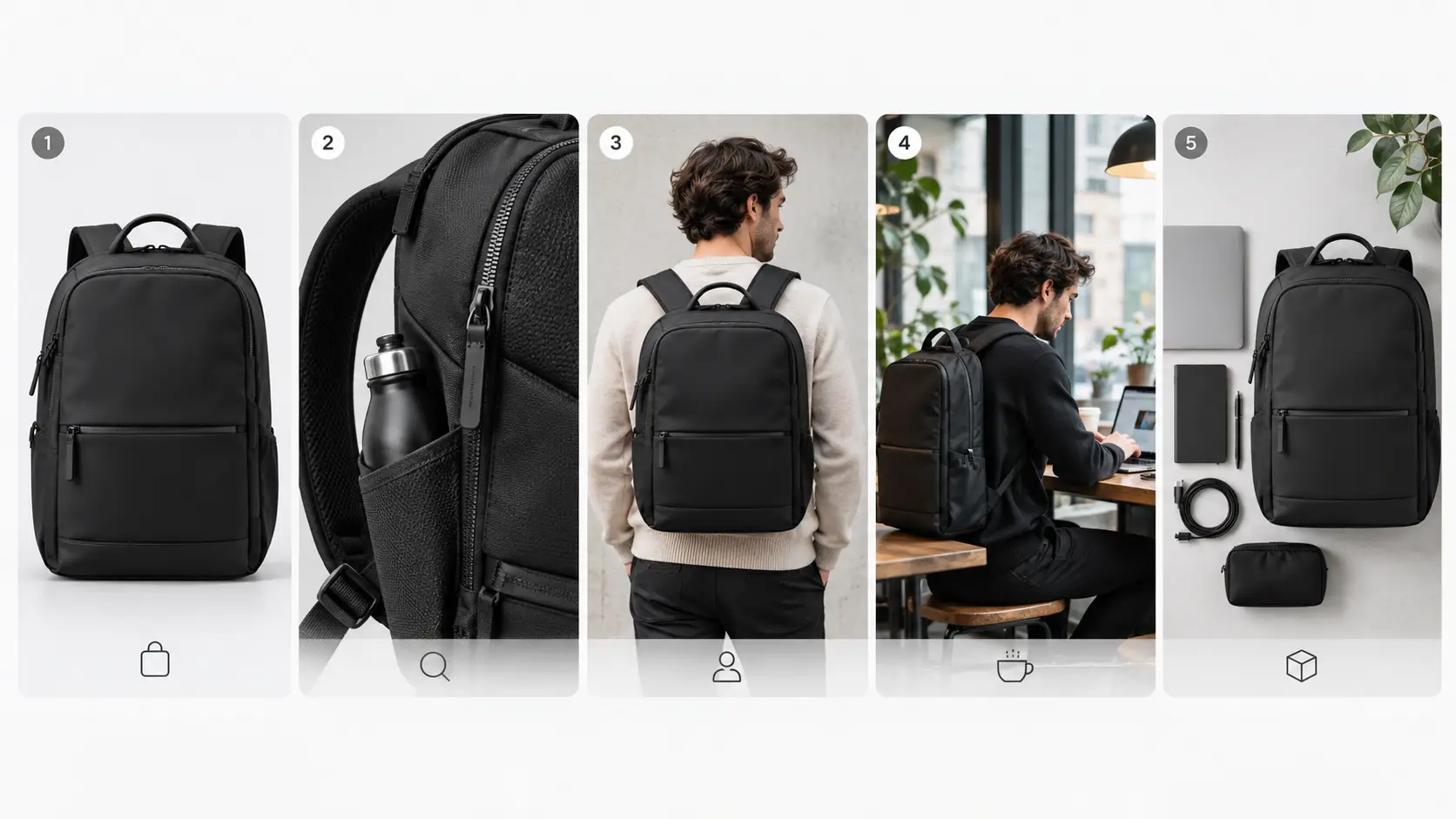
A product gallery works best when each image answers a different question. Instead of expecting one photo to show the product, explain its size, prove its quality, and demonstrate its use, build the gallery in a logical sequence.
A practical ecommerce gallery might look like this:
Image 1 — Clear Hero Image
Show the product clearly and make it instantly recognizable.
Image 2 — Detail or Alternate Angle
Reveal something the hero image cannot show, such as the back, side, texture, controls, or construction.
Image 3 — Scale or Fit
If size matters, place the product next to a familiar object or show it on a person so shoppers can judge proportions more easily.
Image 4 — Lifestyle or In Use
Show how the product looks, fits, or works in a realistic setting.
Image 5 — Feature, Material, or Packaging
Use the final image to answer another practical buying question, such as what is included, how the material looks up close, or how the product is packaged.
Salsify’s 2025 Consumer Research recommends at least five product images and two videos as a best-practice benchmark for richer product content.
That does not mean every product needs the same gallery or that five images will automatically increase conversions. The better rule is simpler: every image should add new information.
A strong gallery should gradually move the shopper from seeing the product clearly to understanding it in real life and, finally, to feeling confident enough to make a decision.
So, Which Should You Shoot First?
There is no single winner between studio and lifestyle photography. Studio photos are better when shoppers need to understand the product itself. Lifestyle photos are better when they need to understand the product in real life.
If you can create only one image, start with the question most likely to hold the buyer back. Do they need a clearer view of the product, or do they need help judging its size, fit, use, or setting?
If you have a full gallery, let each image do a different job:
clarity → detail → scale → context → reassurance
That is usually more useful than filling a gallery with several versions of the same type of photo.
The best product photography strategy is not about choosing a studio or lifestyle. It is about giving shoppers the right information at the right point in their decision.
And if creating multiple settings traditionally takes too much time or production work, an AI product photography can make it easier to test both clean product shots and realistic lifestyle scenes from the same source image