How to Find the Perfect Hairstyle Before Visiting a Salon
By Maria · 2026-07-20

Learn what truly suits your face, natural hair, and routine, then use AI previews to compare looks and walk into your salon appointment with confidence.
Imagine sitting in a salon chair and saying, “Just do whatever you think looks good,” only to look in the mirror thirty minutes later and realize the result is nothing like what you had in mind. This kind of disappointment often happens because the decision was made without considering face shape, hair texture, daily routine, or even a clear reference photo. And because hair can influence how we feel about our appearance, the result matters. In fact, a 2024 survey of 2,000 UK women found that 61% felt more confident and empowered when their hair looked great.
Fortunately, it no longer has to be a guessing game. In this guide, you’ll learn how to choose a hairstyle that suits your face shape ,hair type, and lifestyle — and how to use AI to preview different looks before any scissors come out.
SUMMARY
A successful haircut begins long before the stylist picks up the scissors. First, understand how your natural hair behaves and decide what you want the change to accomplish. Then collect realistic examples, test promising looks with Betatum AI , and take your favorite previews to the salon alongside an honest account of your hair history and styling habits. When your expectations, available time, and stylist’s expertise all point in the same direction, the appointment becomes a shared plan instead of a last-minute gamble.
How Do You Find the Right Hairstyle?
The right hairstyle is one that flatters you in the salon and still works when you style it yourself weeks later. Face shape points you toward lengths and silhouettes that create balance. Hair texture and density determine how the cut actually falls and moves. And your lifestyle decides whether it’s something you can realistically keep up.
A polished cut that needs forty minutes of daily styling may not suit someone who only has five. Personal style matters too, because a haircut should feel like an extension of who you are, not a trend you are trying to copy.
A professional stylist can translate your inspiration into something achievable, while Hairstyle AI visualization provides a useful hairstyle preview before you commit. The best decision comes from considering all these factors together rather than relying on a single photo or recommendation.
Why Do So Many People Regret Their Haircuts?
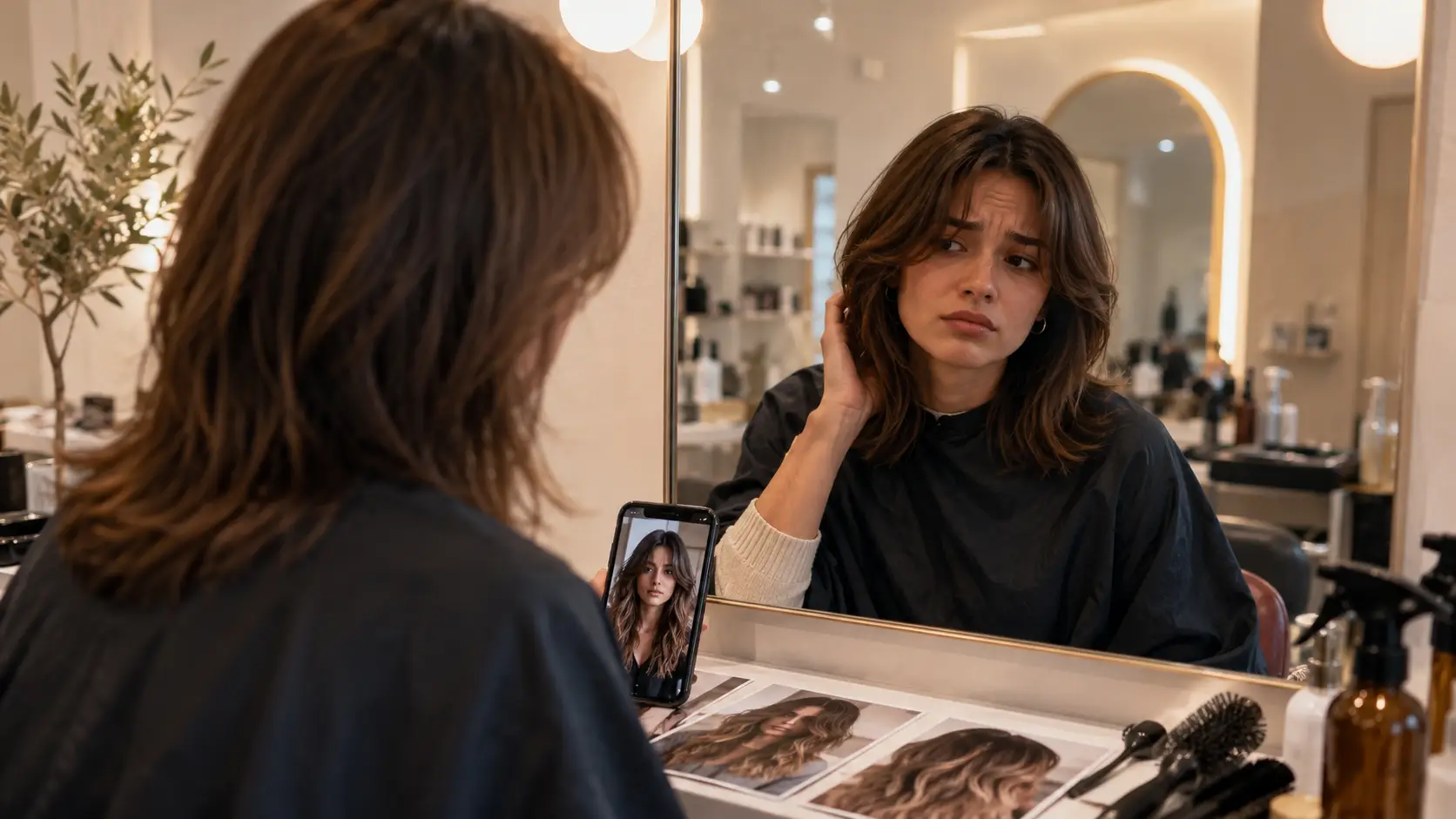
Haircut regret does not always mean the stylist did a poor job. More often, it begins with a gap between the style someone imagined and what their hair can realistically do. A haircut may look perfect in a reference photo but feel completely different when adapted to another person’s features, natural hair, and daily routine.
Copying a Celebrity Haircut Without Adapting It
A celebrity’s haircut is usually chosen for their facial proportions, hair type, and overall image. The photo may also involve extensions, professional styling, flattering lighting, or careful editing. Celebrity photos can provide useful inspiration, but the cut should always be adapted to the person wearing it.
Ignoring How Your Hair Naturally Behaves
The same haircut can produce completely different results on straight, wavy, curly, and coily hair. A cut that falls softly on straight hair may appear shorter or fuller on curls, while layers designed to reduce bulk in thick hair could make fine hair look thinner. Working with natural texture creates a result that is easier to manage and more predictable.
Expecting the Haircut to Look Exactly Like the Reference Photo
A reference image shows a finished look, not necessarily what the haircut looks like without styling. Blowouts, curling tools, hair products, extensions, color treatments, and filters may all contribute to the result. Before choosing a style, ask which parts come from the actual cut and which require additional styling.
Not Explaining What You Really Want
Words such as “short,” “layered,” and “low-maintenance” can mean different things to different people. A 2025 survey of 2,000 American men found that 21% felt nervous about requesting a new hairstyle, while 23% had previously been afraid to ask for the specific cut they wanted. A clear hairstyle consultation, supported by reference photos and specific preferences, can prevent this uncertainty from becoming disappointment.
Choosing a Trend Instead of a Style That Suits You
A viral haircut may look exciting online without complementing your face, natural hair, personal style, or everyday wardrobe. Trends work best when they are treated as inspiration and adjusted to suit the individual rather than copied exactly.
Underestimating the Maintenance
Bangs, sharp fades, polished bobs, and heavily layered cuts may require frequent trims, styling products, or daily heat styling. If that level of upkeep does not fit your routine, the haircut may only look the way you imagined on the day you leave the salon.
Know Your Face Shape Before Choosing a Hairstyle
Face shape is a useful starting point, but it should not be treated as a strict rule. Use it to understand which lengths, shapes, and details may create the balance you prefer.
Common Face Shapes
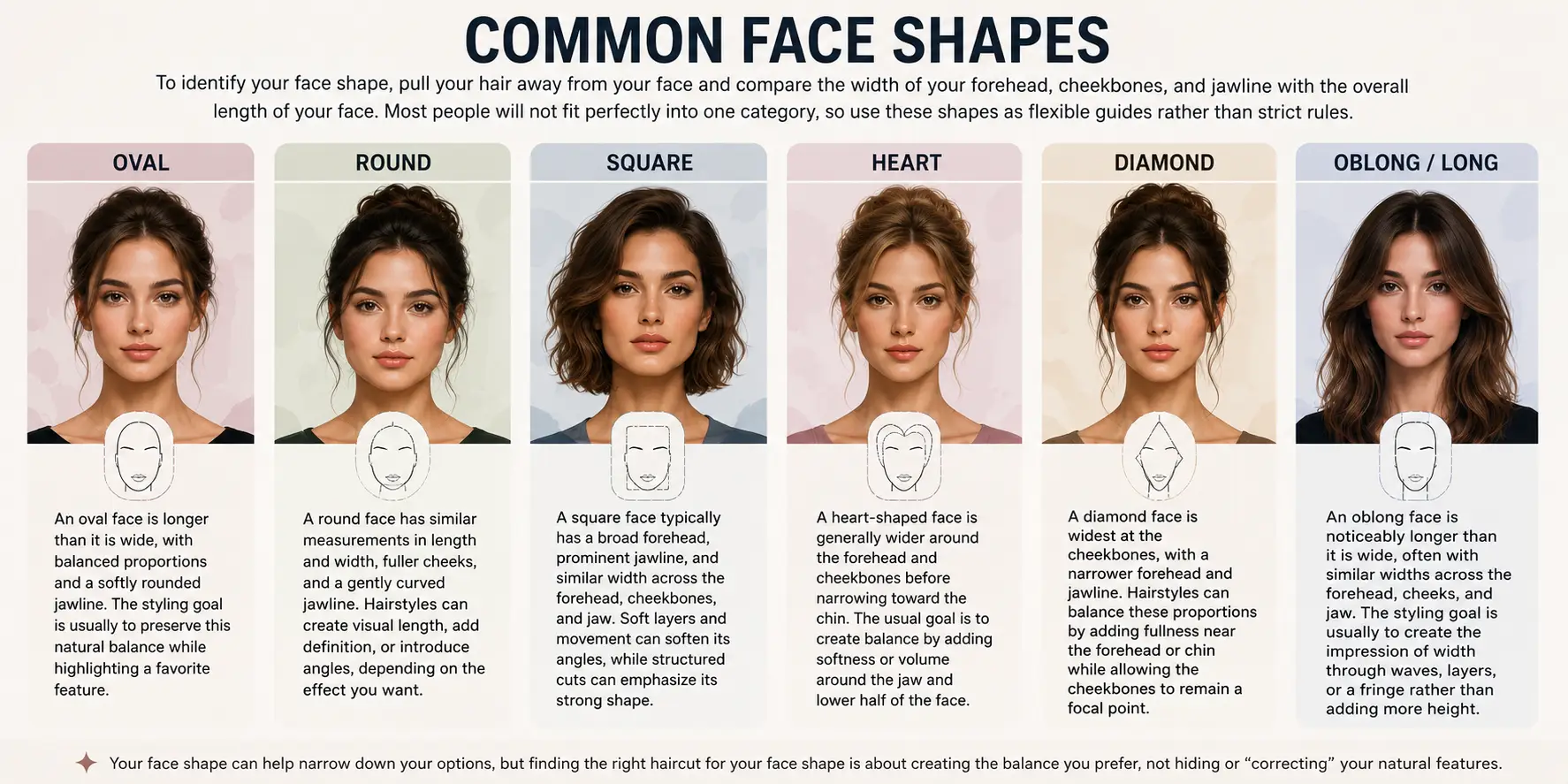
To identify your face shape, pull your hair away from your face and compare the width of your forehead, cheekbones, and jawline with the overall length of your face. Most people will not fit perfectly into one category, so use these shapes as flexible guides rather than strict rules.
Oval: An oval face is longer than it is wide, with balanced proportions and a softly rounded jawline. The styling goal is usually to preserve this natural balance while highlighting a favorite feature.
Round: A round face has similar measurements in length and width, fuller cheeks, and a gently curved jawline. Hairstyles can create visual length, add definition, or introduce angles, depending on the effect you want.
Square: A square face typically has a broad forehead, prominent jawline, and similar width across the forehead, cheekbones, and jaw. Soft layers and movement can soften its angles, while structured cuts can emphasize its strong shape.
Heart: A heart-shaped face is generally wider around the forehead and cheekbones before narrowing toward the chin. The usual goal is to create balance by adding softness or volume around the jaw and lower half of the face.
Diamond: A diamond face is widest at the cheekbones, with a narrower forehead and jawline. Hairstyles can balance these proportions by adding fullness near the forehead or chin while allowing the cheekbones to remain a focal point.
Oblong or long: An oblong face is noticeably longer than it is wide, often with similar widths across the forehead, cheeks, and jaw. The styling goal is usually to create the impression of width through waves, layers, or a fringe rather than adding more height.
Your face shape can help narrow down your options, but finding the right haircut for your face shape is about creating the balance you prefer, not hiding or “correcting” your natural features.
Hair Texture
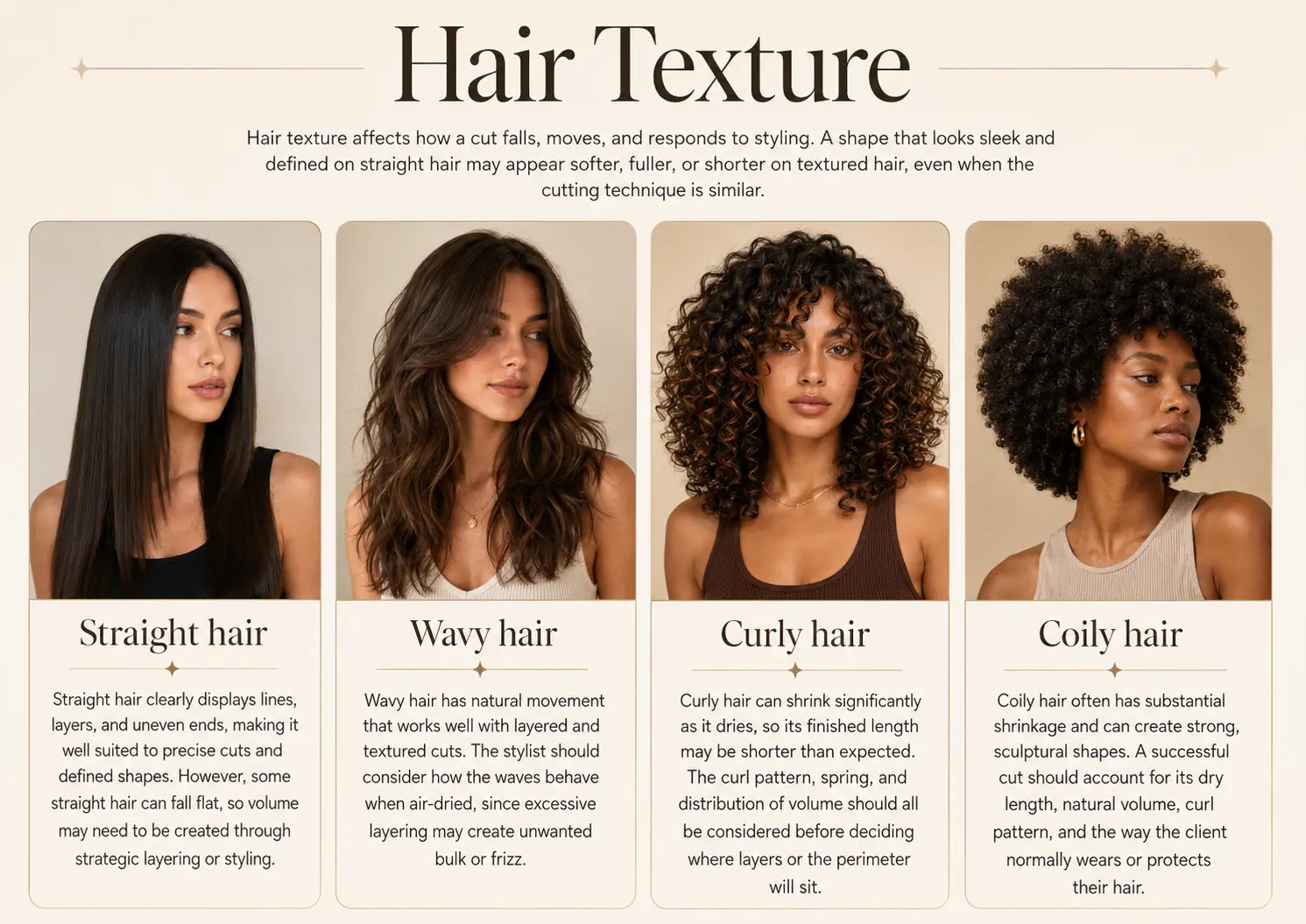
Hair texture affects how a cut falls, moves, and responds to styling. A shape that looks sleek and defined on straight hair may appear softer, fuller, or shorter on textured hair, even when the cutting technique is similar.
Straight hair: Straight hair clearly displays lines, layers, and uneven ends, making it well suited to precise cuts and defined shapes. However, some straight hair can fall flat, so volume may need to be created through strategic layering or styling.
Wavy hair: Wavy hair has natural movement that works well with layered and textured cuts. The stylist should consider how the waves behave when air-dried, since excessive layering may create unwanted bulk or frizz.
Curly hair: Curly hair can shrink significantly as it dries, so its finished length may be shorter than expected. The curl pattern, spring, and distribution of volume should all be considered before deciding where layers or the perimeter will sit.
Coily hair: Coily hair often has substantial shrinkage and can create strong, sculptural shapes. A successful cut should account for its dry length, natural volume, curl pattern, and the way the client normally wears or protects their hair.
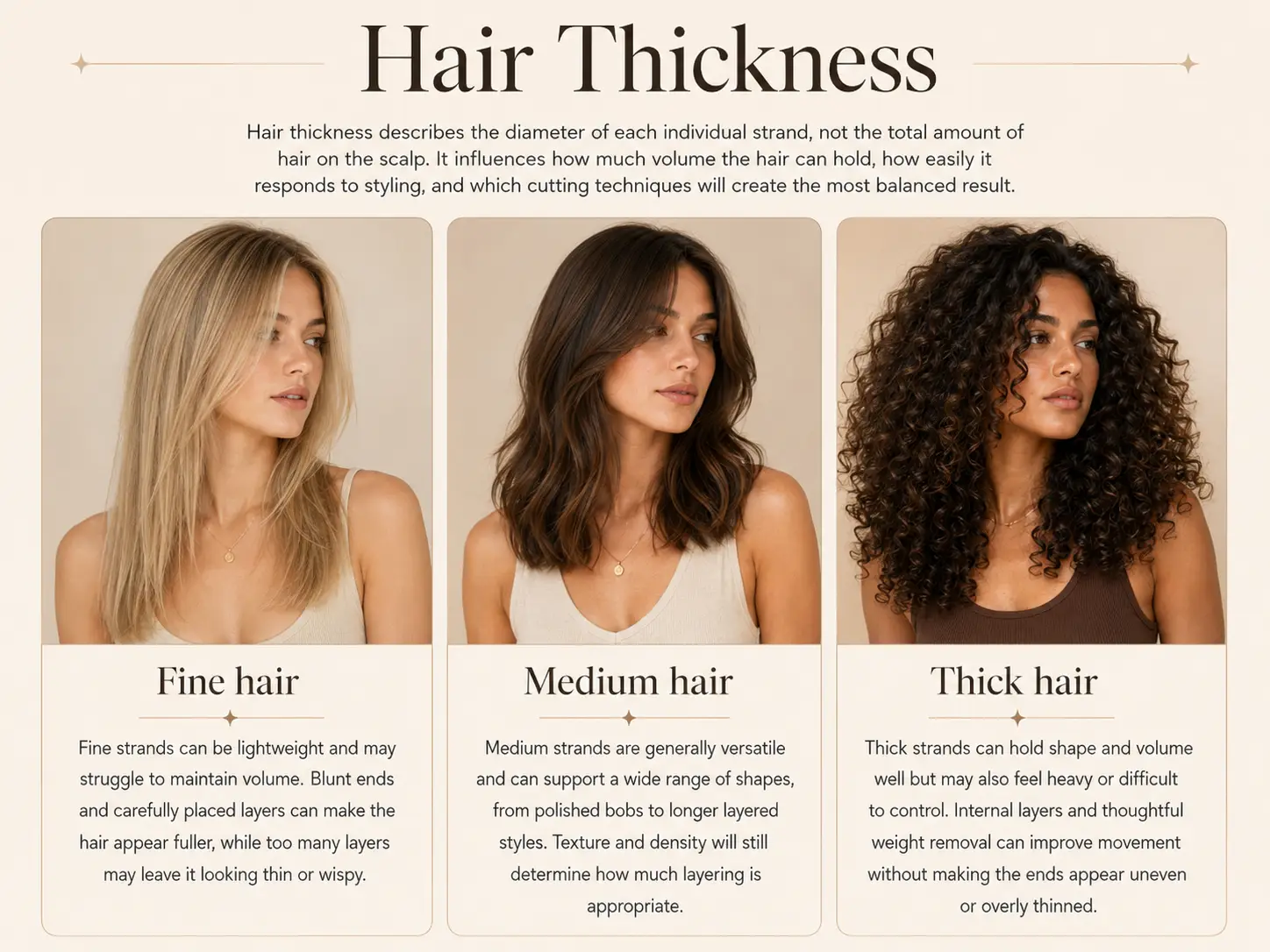
Hair Thickness
Hair thickness describes the diameter of each individual strand, not the total amount of hair on the scalp. It influences how much volume the hair can hold, how easily it responds to styling, and which cutting techniques will create the most balanced result.
Fine hair: Fine strands can be lightweight and may struggle to maintain volume. Blunt ends and carefully placed layers can make the hair appear fuller, while too many layers may leave it looking thin or wispy.
Medium hair: Medium strands are generally versatile and can support a wide range of shapes, from polished bobs to longer layered styles. Texture and density will still determine how much layering is appropriate.
Thick hair: Thick strands can hold shape and volume well but may also feel heavy or difficult to control. Internal layers and thoughtful weight removal can improve movement without making the ends appear uneven or overly thinned.
Hair Density
Hair density refers to how many strands grow within a particular area of the scalp, while thickness describes the size of each strand. This means someone can have fine but highly dense hair, or thick strands with relatively low density.
Density can completely change the appearance of the same haircut. A heavily layered style may create movement in high-density hair but make low-density hair look sparse. Similarly, a blunt bob may make lower-density hair appear fuller, while the same cut on very dense hair could create too much weight around the ends. Your stylist should assess both density and thickness before deciding how much hair to remove.
Understand Your Hair Growth Pattern
Hair does not grow in one uniform direction. Its natural growth pattern can affect where a fringe separates, how the crown sits, and whether a polished style stays in place after the salon blow-dry wears off.
Cowlicks: A cowlick pushes a section of hair in a different direction from the surrounding strands. Cutting that area too short may make it stand up or separate more noticeably, so the style should work with its movement.
Natural part: Hair often falls naturally to one side because of its growth direction. Changing that part may temporarily create volume, but maintaining it could require regular heat styling or additional products.
Hairline: A rounded, uneven, receding, or widow’s-peak hairline changes how fringes and face-framing layers sit. Examining the hairline before cutting helps prevent gaps or sections that refuse to lie as expected.
Whorls: Whorls commonly appear around the crown, where the hair grows in a circular pattern. Their direction can determine how short layers settle and whether the crown looks smooth, flat, or lifted.
For the most accurate assessment, let your stylist see how your clean, dry hair falls naturally before it is brushed, straightened, or heavily styled.

Choose a Hairstyle That Fits Your Lifestyle
The best haircut is not simply the one that looks most impressive in a photograph. It is the one you can realistically wash, style, maintain, and enjoy within your normal routine.
Active lifestyles and gym-goers: Think about whether the style needs to stay out of your face, work in a ponytail, or hold up after frequent washing.
Busy professionals: Go for something that looks put-together without needing a long morning routine.
Parents: A practical cut should be quick to refresh and easy to secure when necessary. Before choosing short layers or a fringe, consider whether you will have time to style them each morning.
Students: Budget, dress codes, changing trends, and limited styling time can all influence the decision. A versatile haircut may provide more ways to experiment without requiring constant professional maintenance.
Frequent travelers: Look for a style that works in different climates and does not depend on multiple tools or products. Hair that can air-dry attractively is often easier to manage while traveling.
Low-maintenance versus high-maintenance styles: Be honest about how much time you want to spend on your hair each day and how often you can return to the salon. Blunt fringes, sharp fades, precision bobs, and certain layered cuts may require more frequent trims, while softer shapes often grow out more gradually.
What Are You Trying to Achieve with Your New Hairstyle?
Before choosing a haircut, think about what you want it to achieve. A clear goal will help you find a style that is both flattering and practical.
Add more volume: Consider a shorter length, blunt ends, or carefully placed layers. Avoid excessive layering if your hair is fine or has low density.
Create a slimmer-looking face: Face-framing pieces, length below the chin, and subtle volume at the crown can create a more elongated appearance.
Achieve a more professional look: Choose a polished, intentional style that stays presentable and fits comfortably into your work routine.
Look younger: Soft layers, natural movement, and fresh face-framing can create a lighter, more youthful appearance without dramatically changing your identity.
Choose an easy-to-maintain style: Look for a haircut that works with your natural texture, air-dries well, and does not require frequent trims or daily heat styling.
Stay on trend without sacrificing suitability: Adapt one element of a current trend to your features instead of copying the entire hairstyle.
Grow your hair out gracefully: Request small trims, subtle shaping, and minimal layering to remove damage without sacrificing unnecessary length.
Your goal should help narrow down your options, not override what is realistic for your hair.
Try Different Hairstyles with AI Before You Visit the Salon
You find a short bob or layered cut that looks perfect online, but just before booking the appointment, one thought stops you: What if it does not look the same on me? That uncertainty causes many people to stay with a familiar hairstyle even when they want a change. A virtual hairstyle try on offers a practical way to explore new looks before making a real commitment.
AI is not replacing professional hairstylists. It simply helps you turn a vague idea into a shortlist of styles, colors, and lengths you can discuss during your appointment.
Most AI hairstyle tools let you upload a selfie and try different cuts, colors, lengths, and bangs on your own photo. You can compare options side by side and save the results to share with your stylist.
Depending on the tool, you may be able to preview dozens of options within a few minutes. This removes much of the guesswork and makes different possibilities easier to visualize than imagination alone.
Benefits of Previewing Hairstyles with AI
AI hairstyle previews do more than satisfy curiosity. They make the decision-making process faster, clearer, and less stressful by allowing you to compare different options before making a permanent change.
Save money: Rule out styles you are unlikely to enjoy before paying for a major cut or color change.
Save time: Narrow down your options before the salon instead of making the entire decision in the chair.
Reduce disappointment: Seeing a realistic preview can reveal whether a style feels right before your hair is cut.
Communicate more clearly: Show your stylist visual examples instead of relying only on words such as “shorter” or “more layered.”
Make decisions confidently: Compare several looks at your own pace without the pressure of making an immediate commitment.
AI Previews Aren’t Perfect, and That’s Okay
An AI hairstyle changer is designed to support your decision, not guarantee that the salon result will look identical. Lighting, image quality, and photo angle can all affect how accurate the preview looks. A static image also can’t capture how your hair actually moves, and curly or coily textures are harder to simulate. Think of it as a starting point, not a guarantee.
Use AI previews to explore possibilities and communicate your preferences, then ask your stylist whether the chosen look is realistic for your natural hair. Together, the digital preview and professional advice can lead to a much more informed final decision.
Where Can You Find Hairstyle Inspiration That Actually Fits You?
When collecting hairstyle ideas before a haircut, look beyond styles that simply catch your attention. Prioritize examples from people with a similar hair texture and face shape whose styling routine also resembles yours.
Pinterest: Create a private inspiration board and save styles with similar lengths, textures, and features. After collecting several images, look for repeated details such as layers, bangs, volume, or face-framing pieces.
Instagram: Search specific terms or hashtags related to your hair, such as curly bobs, fine-hair layers, or low-maintenance short cuts. Videos are especially useful because they show how a hairstyle moves from different angles.
Celebrity hairstyles: Celebrity photos can introduce you to new shapes and trends, but remember that the hair may include extensions, professional styling, or editing. Look for several photos of the same haircut rather than relying on one red-carpet image.
Salon portfolios: A salon’s portfolio shows what its stylists can actually create. Pay attention to clients whose natural hair resembles yours, and check whether the salon has experience with your preferred cut or texture.
Real customer photos: Before-and-after images and unfiltered customer photos provide a more realistic view of how a haircut looks outside a professional photoshoot. They can also reveal how the style appears on different face shapes and hair types.
Betatum AI Hairstyle: If you like a hairstyle but cannot imagine how it might look on you, use the Betatum AI Hairstyle tool to create a personalized preview. Upload a clear selfie, experiment with different styles, colors, and lengths, and save the most convincing results to discuss with your stylist.
Bring several real reference photos to your appointment, including examples of what you like and what you want to avoid. Multiple images help your stylist identify the common details you are drawn to, while words such as “short,” “soft,” or “layered” can easily be interpreted in different ways.
How Can You Explain the Hairstyle You Really Want?
Even the perfect hairstyle idea can go wrong if it is not communicated clearly. Phrases such as “just a trim” or “make it look like this celebrity” leave too much room for interpretation. A successful hairstyle consultation should combine visual references with specific information about your preferred length, layers, bangs, texture, and daily routine.
Bring three to five reference photos: One image may show professional styling, extensions, or an angle that hides important details. Several references help your stylist recognize the features you consistently prefer.
Include different angles: Bring front, side, and back views whenever possible. These show how the fringe frames the face, where the layers begin, and how the overall shape sits around the head.
Explain what you like in each photo: Do not assume the stylist knows which detail caught your attention. Point out the length, layers, bangs, volume, texture, shape, or color you want to recreate.
Describe your daily styling routine: Be honest about how much time you spend on your hair and whether you use a hair dryer, straightener, curling iron, or styling products. This helps the stylist recommend a realistic version of the cut.
Share your complete hair history: Mention previous coloring, bleaching, chemical treatments, extensions, or cuts that are still growing out. These details can affect what is safe and achievable during the appointment.
Say what you do not want: Explain your boundaries as clearly as your preferences. For example, specify if you do not want visible layers, short bangs, thinning shears, or a length that cannot be tied back.
Before the cutting begins, confirm the planned length, shape, and maintenance requirements together. A few extra minutes of clear communication can prevent months of growing out a haircut you never intended to get.
Common Mistakes to Avoid Before a Hair Appointment
Good preparation helps your stylist understand your starting point, set realistic expectations, and recommend a hairstyle that is both achievable and safe for your hair.
Common Mistake | Why It Can Cause Problems | What to Do Instead |
|---|---|---|
Arriving with heavy product buildup | Dry shampoo, oils, gels, and styling creams can hide your natural texture and make your hair difficult to assess. | Follow the salon’s washing instructions and avoid excessive product before your appointment. |
Hiding previous coloring or treatments | Box dye, bleach, henna, relaxers, perms, keratin treatments, and extensions can affect what is safe and achievable. | Give your stylist a complete and honest account of your hair history, even if the treatment was months ago. |
Expecting a Photoshop-perfect result | Reference photos may include extensions, professional styling, filters, flattering lighting, or retouching. | Focus on adapting the hairstyle to your natural hair instead of expecting an identical result. |
Bringing AI images without context | AI can exaggerate volume, change the hairline, or create textures that may not be realistic for your hair. | Tell your stylist that the image was AI-generated and explain exactly which elements you like. |
Ignoring maintenance requirements | You may choose a cut that demands more time and upkeep than your routine allows. | Ask about styling time, required products, tools, and salon visits before committing to the hairstyle. |
Conclusion
Finding the perfect hairstyle is not about copying the latest trend or recreating someone else’s look. It is about choosing a style that complements your face, works with your hair type, fits your lifestyle, and makes you feel confident. By combining AI hairstyle previews with professional salon advice, you can narrow down your options, understand what is realistically achievable, and arrive at your appointment with clear expectations instead of uncertainty.
Before booking your next salon visit, upload a clear, front-facing selfie to the Betatum AI Hairstyle tool and experiment with different cuts, colors, lengths, and bangs. Save your favorite previews, share them with your stylist, and take the first step toward a hairstyle you will feel genuinely excited to wear.