
Can AI Face Swap Fool People? Here's the Truth
By Maria · 2026-07-15
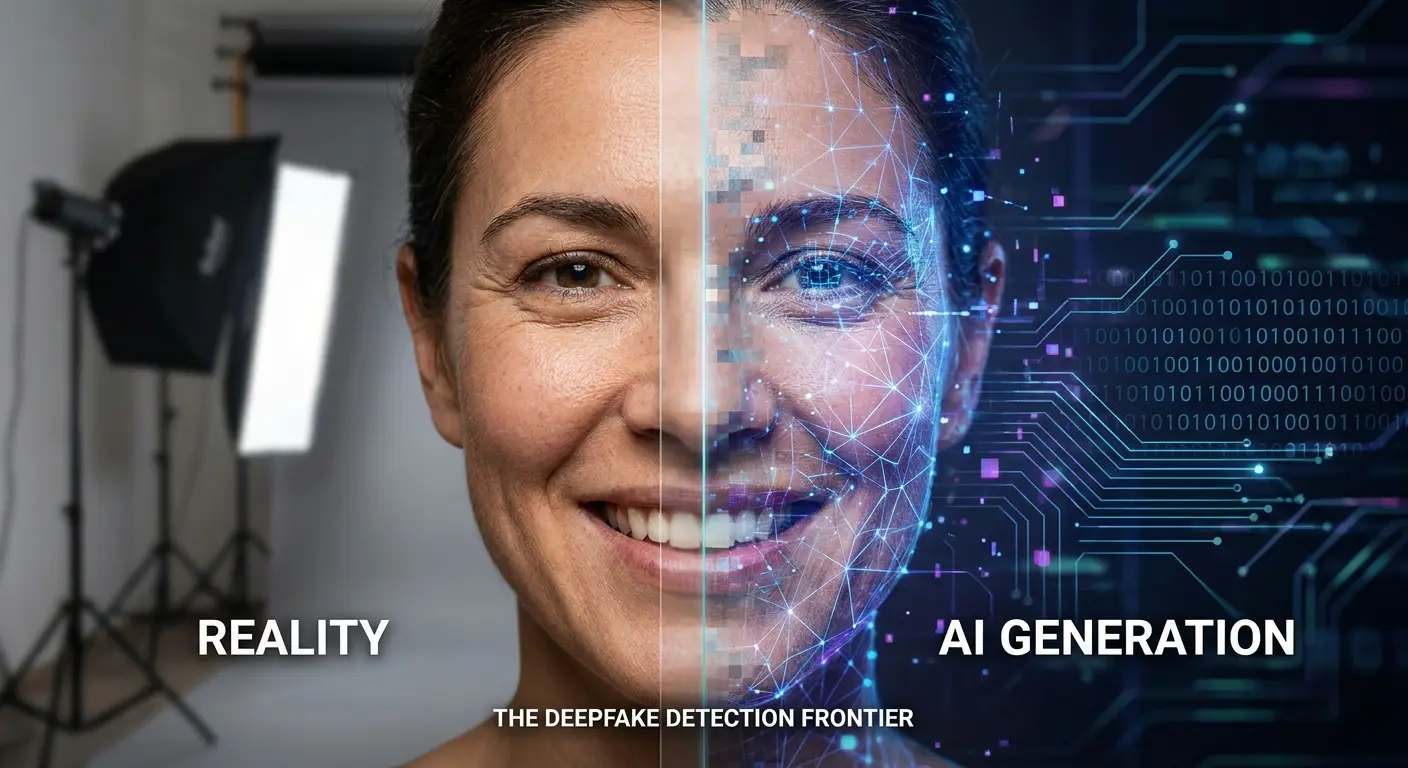
AI face swaps are more realistic than ever—but they're not impossible to spot. Learn when they can fool people, the warning signs to watch for, and how to recognize AI-generated photos and videos with confidence.
You’re scrolling through social media and spot a video of someone you know doing something totally unexpected. The face looks right, the expressions match, and for a second, you completely believe it until something feels slightly off. It raises an important question: Can AI face swap fool people? In this article, we’ll explore when these edits look convincing, why the technology still makes mistakes, which visual warning signs to watch for, and how you can protect your digital identity.
Summary
In this article, we explore the fascinating world of AI face swaps to answer a critical question: can they truly fool us? We will dive into the technology behind their incredible realism, the psychological reasons our brains are so easily tricked, and the specific situations where these edits succeed or fail. By the end, you will learn eight clear signs to spot fake videos, understand the limits of expert detection, and discover how to use tools like Betatum AI Face Swap ethically and securely for your creative projects.
Can AI Face Swap Fool People? Here's the Truth
Yes, but usually not for long. If a generation uses a high-quality model, a sharp source image, and good lighting, it can easily trick a viewer for a few seconds, especially if they are scrolling past a short clip on a small phone screen. But the illusion usually breaks down in longer videos.
The AI starts to struggle with consistent facial tracking, shifting shadows, and complex expressions. Plus, if you actually know the person in the video, you’ll probably spot the fake right away simply because their natural smile, voice, and specific mannerisms are missing.
How Realistic Are AI Face Swaps in 2026?
AI face swaps have reached a point where they can easily pass a casual glance. Thanks to advancements in diffusion models and refined generative architectures, the technology can now map facial structures, match skin tones, and replicate lighting with incredible accuracy. However, the level of realism depends heavily on a few specific technical factors.
Image vs. Video Swaps
Static image swaps are currently highly convincing. An AI only has to generate a single flawless frame. Video swaps are much more complex because the AI has to maintain temporal consistency. This means it must track the face smoothly across multiple frames without flickering, blurring, or shifting as the subject moves.
Source Material Quality
An AI model is only as good as the data you feed it. A high-resolution, well-lit source image directly translates to a sharper, more believable output. Poor lighting, shadows across the face, or pixelated inputs usually result in a muddy and obviously manipulated final product.
The Celebrity Advantage
You might notice that face swaps involving famous actors or politicians often look incredibly realistic, while those of everyday users sometimes look slightly off. This happens because AI models are trained on massive public datasets.
There are thousands of high-quality, multi-angle photos of celebrities available for the AI to learn from. An average user simply does not have that volume of reference data baked into the system.
Current Limitations
Despite the progress, the technology still struggles with fine details. Extreme head angles, sudden lighting changes, and objects passing in front of the face often break the illusion. AI also frequently misinterprets the geometry of teeth, the boundaries where hair meets the background, and natural blinking patterns.
Recent cybersecurity reports from late 2025 indicate that while high-quality image swaps can bypass casual human detection over %80 of the time, continuous video swaps still leave behind visual artifacts that trigger detection flags in most analytical tools.
While a single frame might look photographically perfect, a static visual is only half the equation. Looking exactly like someone is an impressive technical feat, but it does not mean the AI can replicate how they naturally move, speak, or react.
Why Modern AI Face Swaps Look So Convincing
Early face swaps were easy to spot, but modern AI maps new identities so seamlessly that most people never notice the manipulation. If you are questioning whether today’s face swaps are truly realistic enough to fool us, the answer lies in how these tools process the physical geometry of a human face.
Here is exactly what the technology is doing behind the scenes to create such believable results:
Facial landmark tracking: The AI maps specific reference points on a face, like the corners of the eyes, the bridge of the nose, and the edges of the lips. If a person in a video turns their head or looks down at a phone, the swapped digital face stays locked to those coordinates without sliding around.
Identity preservation: Older tools often blended two faces together, creating an unnatural hybrid. Modern systems isolate core identity traits like a distinct jawline or specific eye shape and project them onto the target footage without losing the person’s recognizable features.
Expression matching: Capturing emotion is critical. When the person in the original video laughs or furrows their brow, the AI recreates that exact muscle tension. A genuine smile or a subtle frown transfers directly to the swapped face rather than looking like a stiff, static mask.
Lighting adaptation: A face generated with bright studio lighting will look completely out of place in a video shot in a dimly lit room. Modern AI analyzes the light sources in the target footage and applies matching shadows, highlights, and color tones to the new face.
Skin texture synthesis: Perfectly smooth skin is a massive visual red flag. To counter this, AI generation now renders microscopic details. It creates pores, fine lines, and natural blemishes, ensuring the surface looks like actual human skin rather than polished plastic.
Why Our Brains Are Easily Fooled by AI Face Swaps
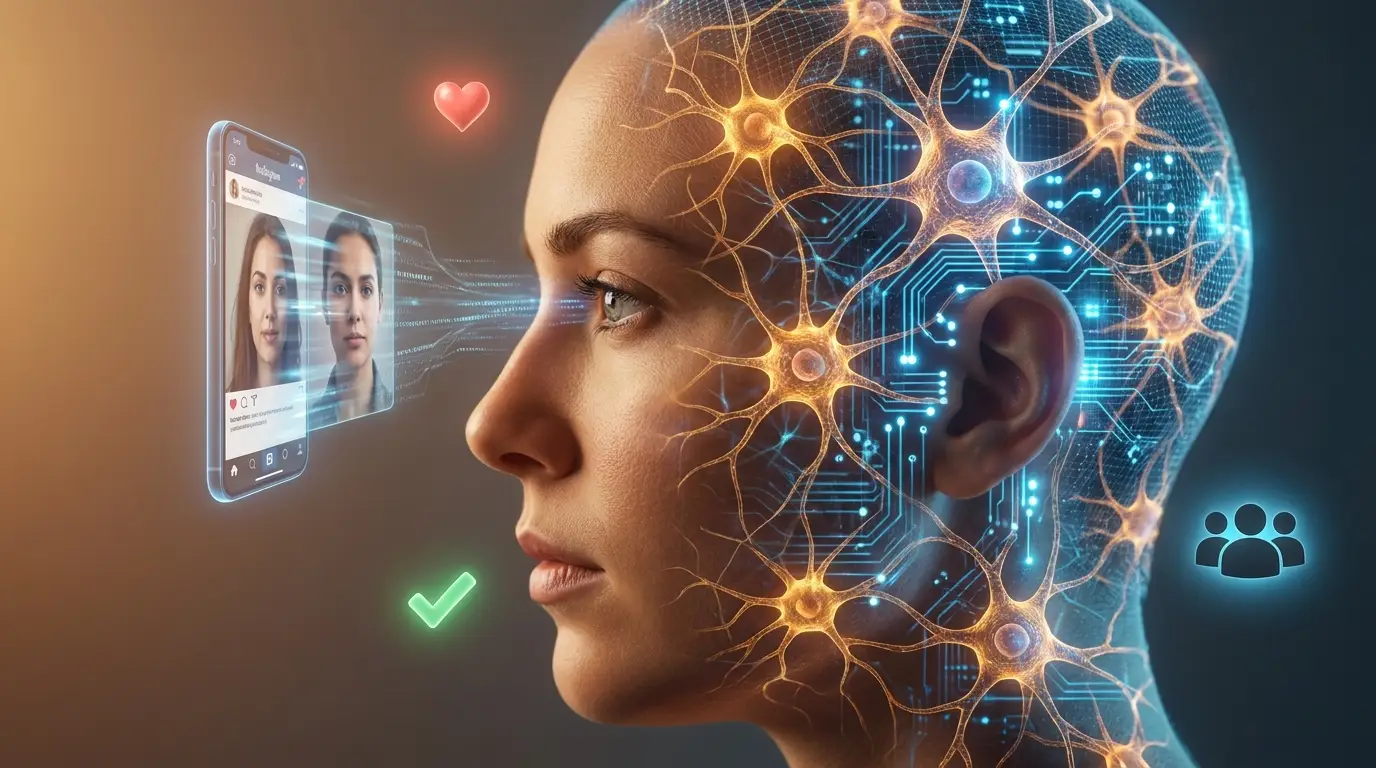
For most of human history, visual evidence was undeniable. Our brains are biologically hardwired to trust what our eyes see, relying on visual input as the ultimate proof of reality. Modern AI face swaps exploit this deeply ingrained trust. By perfectly mimicking the biological cues we use to recognize each other: like micro-expressions, eye contact, and skin texture; these algorithms bypass our logical defenses. Before we even have a chance to question the source, our brain has already processed the image as real.
Here is exactly why our minds are so quick to accept synthetic content:
Confirmation Bias: We are highly susceptible to content that aligns with our existing beliefs. If an AI-generated video shows a person doing or saying something we already expected them to do, our brain accepts it as confirmation rather than pausing to scrutinize the pixels.
Familiar Faces: The human brain processes recognized faces using a specialized, highly efficient neural pathway. When we see a familiar celebrity or public figure, the brain instantly categorizes the image as “known.” This cognitive shortcut reduces friction, making us much less likely to actively look for digital artifacts.
Emotional Reactions: High-stakes fakes are often designed to trigger outrage, laughter, or shock. When content elicits a strong emotional response, it activates the amygdala, temporarily overriding the brain’s analytical centers. We react first and analyze the footage later, if at all.
Fast Scrolling: Context is a major factor in deception. We consume most media while rapidly scrolling through social feeds on small smartphone screens. In this low-attention state, the brain relies on quick heuristics rather than deep analysis, allowing a well-made face swap to easily slip past our visual filters.
Social Proof: If an AI video has millions of views, thousands of shares, and comments from people treating it as genuine, our brain automatically assumes it is real. We use the collective judgment of the crowd as a shortcut to validate the authenticity of what we are watching.
Ultimately, people often believe fake content without questioning it simply because critical thinking requires active mental energy. The brain prefers to conserve resources by accepting the most straightforward explanation. When an face swap AI successfully replicates reality, it removes the visual friction that would normally alert our brain to stop, pay attention, and investigate.
When AI Face Swaps Can Fool Almost Anyone
Even careful viewers can miss an AI face swap when a video hides the small mistakes that usually reveal it. Short clips, blurry footage, and small screens give people less time and fewer visual details to examine. The following situations can make a fake face appear more convincing:
Situation | Why It Works | Risk Level |
|---|---|---|
Short videos | The clip may end before viewers notice unnatural expressions, lip-sync issues, or facial movements. | High |
Low-resolution footage | Blur and compression can hide problems around the eyes, mouth, hairline, and facial edges. | High |
Social media reels | Fast-paced content encourages people to react quickly rather than closely examine each frame. | High |
Poor lighting | Shadows and darkness can conceal differences in skin tone, texture, and facial structure. | Medium |
Fast camera movement | Motion blur makes tracking errors and unstable facial features harder to spot. | High |
Mobile viewing | Small screens can hide subtle details that would be easier to notice on larger displays. | Medium |
When AI Face Swaps Usually Fail
AI face swaps often become easier to detect when a video provides more time, detail, or movement to examine. Small errors that seem invisible in a short clip may become obvious in the following situations:
Long interviews: The AI must keep the face consistent for a long time. Viewers may notice flickering, changing skin texture, or unusual expressions.
Close-up 4K footage: Sharp video reveals small mistakes around the eyes, mouth, teeth, hairline, and edges of the face.
Extreme facial expressions: Laughing, shouting, crying, or opening the mouth widely can cause unnatural stretching or distortion.
Multiple camera angles: The face may look convincing from the front but lose its shape when the person turns sideways.
High-quality lighting: Clear, even lighting exposes mismatched skin tones, shadows, reflections, and facial details that poor lighting might hide.
8 Signs an AI Face Swap Might Be Fake
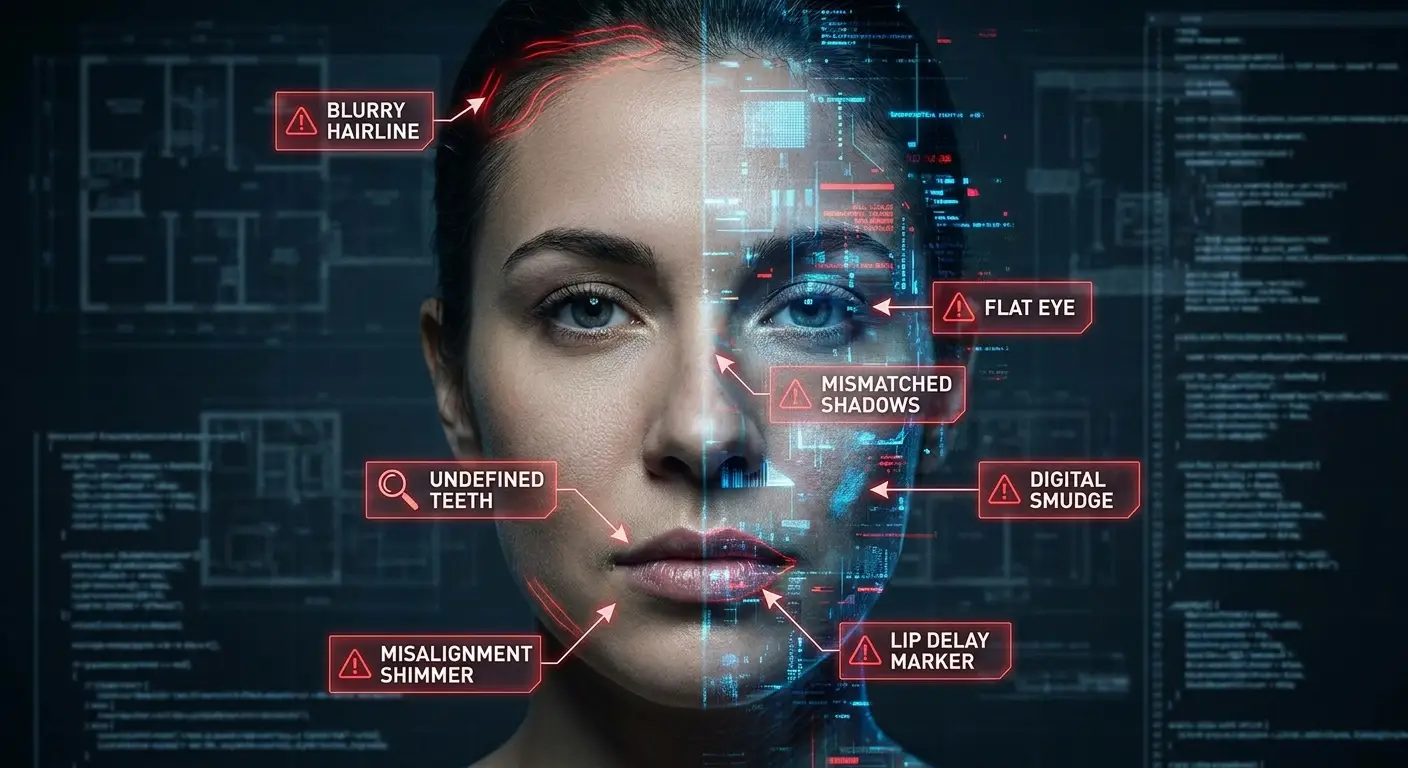
Think you’ve spotted a deepfake? You don’t need a supercomputer to tell the difference. While AI is getting better, it often leaves small clues behind. If something feels off, run this quick mental checklist.
Eye Movement: AI often struggles with natural, erratic eye movement. Look for eyes that seem glazed over or don’t track with the person’s head movement. It happens because the AI is often “pasting” a static eye gaze over the footage.
Hair Edges: Look at the hairline and where the hair meets the background. You might see blurriness or a pixelated halo. The AI often fails to perfectly mask the fine strands of hair against a complex background.
Teeth Geometry: Teeth are notoriously hard for AI. If the mouth opens wide, look for gums that look like skin, or teeth that appear fused together. The AI often interprets teeth as a solid, flat object rather than individual structures.
Neck Alignment: Sometimes the head doesn’t quite “sit” right on the neck. You might notice a slight shimmer or a mismatch in skin tone between the face and the rest of the body. This is because the AI is processing the head as a separate layer from the torso.
Reflections: Check the eyes and jewelry for reflections. Does the light source in the reflection match the surroundings? Often, the AI ignores reflections entirely, leaving you with flat, dull eyes.
Shadows: Shadows are complex. If a shadow on the nose doesn’t match the shadow on the neck, that’s a red flag. The AI sometimes struggles to calculate how light should wrap around a 3D object in real-time.
Lip Synchronization: Watch the mouth closely. Do the sounds match the lips? Sometimes the AI creates a slight delay, or the lips don’t form the right shapes for the words being spoken. This is a classic sign of mismatched processing.
Skin Inconsistencies: Watch for flickering skin texture. One moment, the skin looks smooth; the next, you see a weird smudge. This happens because the AI is constantly “re-generating” the skin texture across frames to keep up with movement.
Note: No single sign is a guaranteed “gotcha.” AI is evolving daily. Always look for a combination of these errors before making a judgment.
Can Experts Always Detect AI Face Swaps?
The short answer is no. Even forensic experts struggle to keep up with the pace of generative AI.
Detection tools are essentially in a constant arms race. Every time a new tool is built to spot AI, the next generation of AI learns how to bypass it. It is a game of cat and mouse that is getting harder for both human eyes and automated scanners to win.
Even with advanced analytical tools, professionals sometimes see false positives. A heavily filtered photo can look just as “fake” to a detector as a malicious deepfake. Our human limitations, combined with the extreme realism of 2026-era models, mean that total certainty is becoming a thing of the past.
Are AI Face Swaps Dangerous or Just Another Creative Tool?
This technology is a double-edged sword. It depends entirely on how it is used.
The Creative Potential
When used ethically, AI face swap technology is transformative.
Entertainment: Filmmakers can fix lighting issues or adjust performances without costly reshoots.
Education: It allows for immersive learning where historical figures can “speak” to students.
Marketing: Brands can create personalized, localized content that resonates better with global audiences.
The Real Risks
However, we cannot ignore the dark side. The primary risks include identity theft, where someone’s likeness is used to scam their friends, and the spread of misinformation via deepfake videos. There are also deep ethical concerns regarding consent using someone’s face without their permission is a violation that technology cannot justify.
At its core, the tool is neutral. It is the intent of the user that defines whether it becomes a positive creative force or a source of harm.
Conclusion
We are entering an era where digital content is becoming harder to verify at a glance. While the technology is becoming incredibly realistic, it hasn’t perfected reality quite yet. By staying informed and watching for the small warning signs we covered, you can navigate your social feeds with much more confidence.
Ready to explore this technology safely? Betatum AI Face Swap gives you the tools to experiment with creative, high-quality portrait generation. We focus on ethical use, putting you in full control of your content. Try it today and see how you can bring your creative projects to life with clarity and realism.