
Best Uses for AI Video Face Swap Beyond Entertainment
By Maria · 2026-07-17
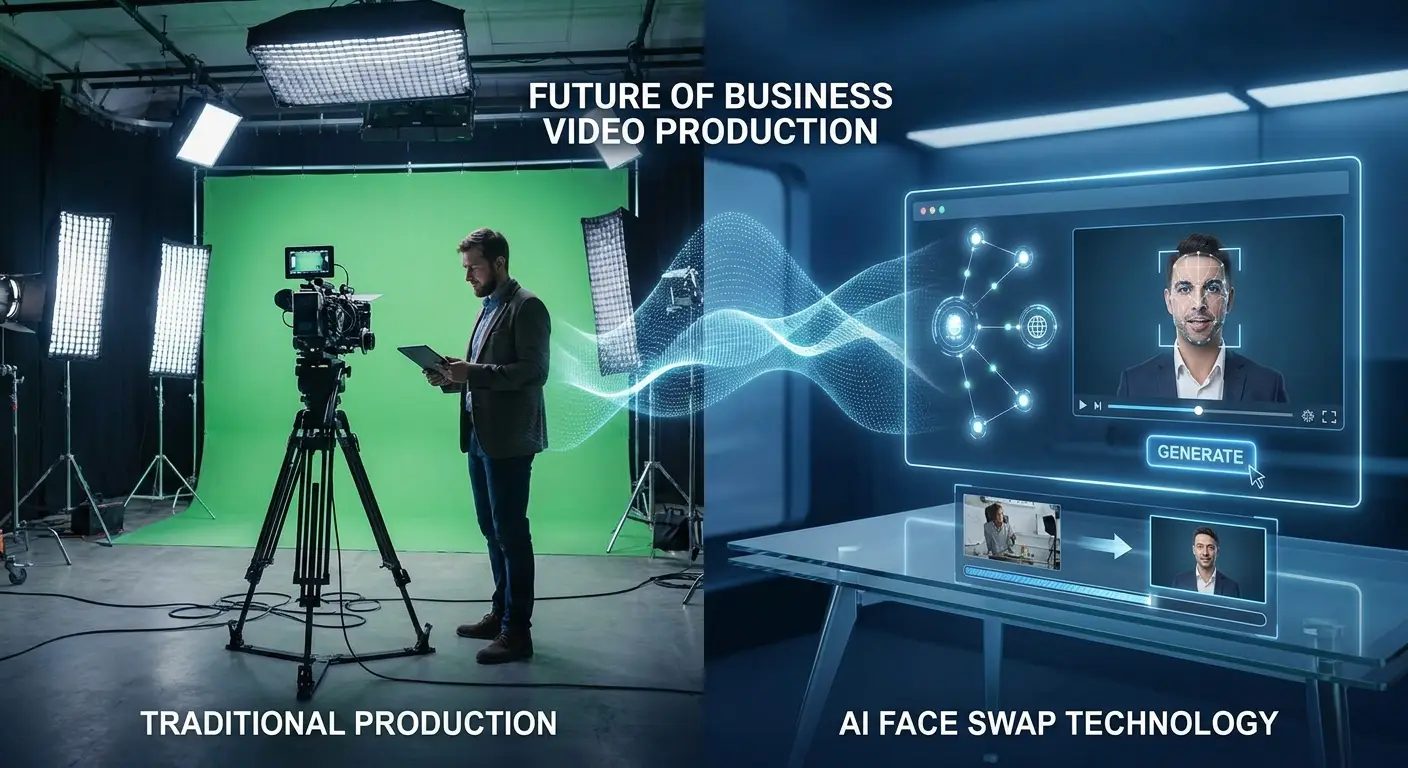
AI video face swap is transforming business video production. Explore practical use cases, key benefits, current limitations, and ethical best practices for professional teams.
A marketing team creates one polished product video, only to receive new requests for localized campaigns, employee training, and personalized client messages without any increase in its production budget.
Reshooting every version is rarely practical, which is why AI video face swap is emerging as a flexible way to adapt approved footage when combined with translation, dubbing, and lip-sync technology. According to McKinsey’s 2025 Global Survey, 88% of respondents said their organizations regularly used AI in at least one business function.
Adobe’s Deepa Subramaniam similarly describes creative AI as giving professionals “more power, precision and control—and time-savings.” In this article, you’ll discover the most valuable business uses of AI video face swap, the industries that can benefit from it, its current limitations, and the consent and transparency practices required for responsible adoption. But can businesses achieve greater speed and scalability without sacrificing audience trust?
Summary
AI video face swap is a technology that uses artificial intelligence to replace or adapt a person’s face in a video while preserving the original movement and expression. Beyond entertainment, businesses use it for localization, training, personalized marketing, and scalable content production. This article covers its main use cases, benefits, limitations, and best practices for responsible use.
Why AI Video Face Swap Is Becoming a Serious Business Tool
For years, video production followed a rigid path: script, shoot, edit, and export. If you needed the same message in three different languages or wanted to update a training module, you had to start the cycle over. This wasn’t just expensive; it created a production bottleneck for teams trying to scale.
AI video face swap can help address this by enabling a “modular” approach to video production. Instead of re-filming, teams can now adapt high-quality master assets to fit new contexts. Here is why this technology is moving from a novelty to a practical business asset:
Faster Content Production: You can create dozens of variations from a single shoot. Whether it’s localized versions for international markets or personalized messages for different client segments, AI allows you to repurpose existing footage without returning to the studio.
Lower Reshoot Costs: When combined with dubbing, lip-sync, or generative editing tools, face swap ai can help teams update selected elements of an existing video without arranging a complete reshoot.
Faster and More Flexible Updates: Business information changes quickly. When face swapping is combined with AI dubbing, lip-sync, or generative video editing, teams can update selected lines, presenters, or product details without recreating an entire video.
Consistent Brand Standards: By using one “hero” video shoot as the foundation, you ensure that lighting, sound quality, and the spokesperson’s performance remain consistent across all your global marketing materials.
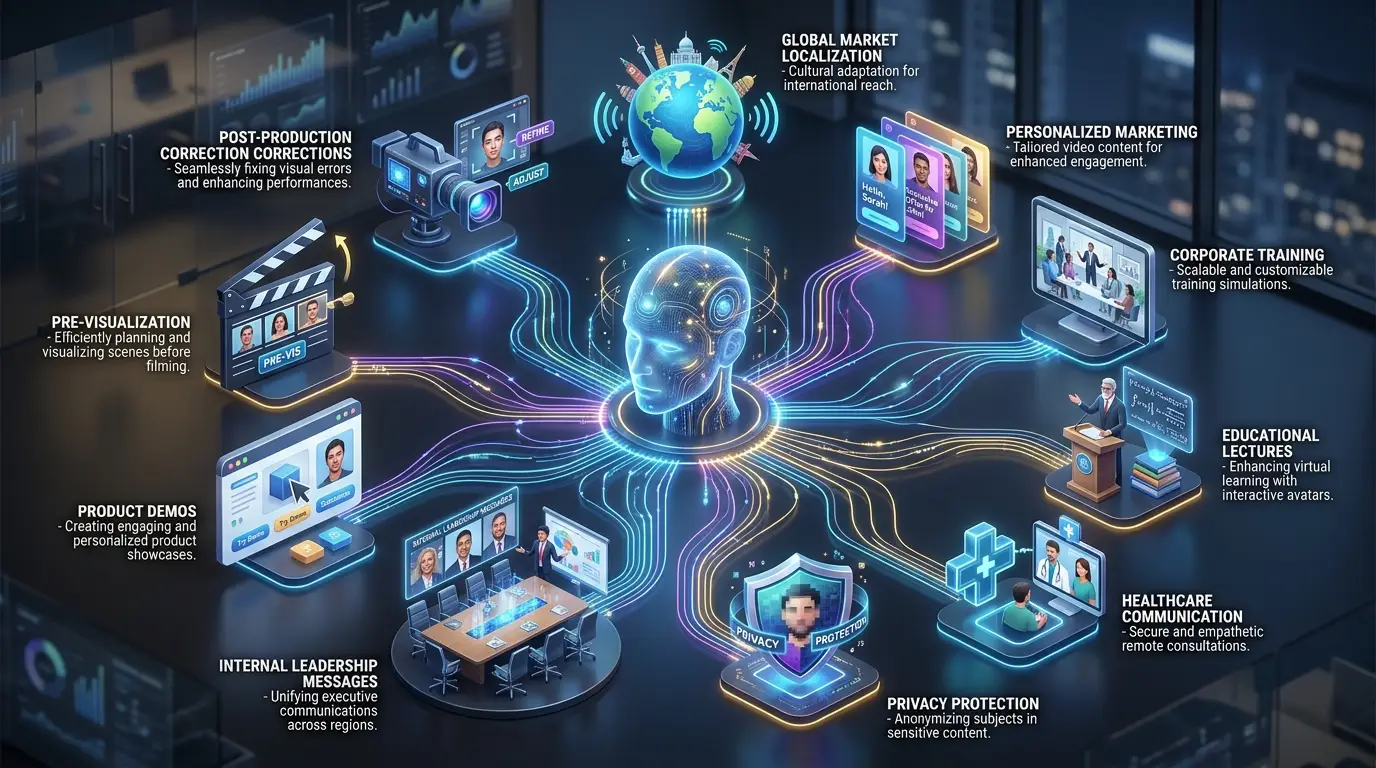
10 Real-World Uses of AI Video Face Swap Beyond Entertainment
The following AI video face swap use cases focus on solving practical communication and production problems, not creating novelty clips. In professional workflows, face swapping is often combined with tools such as AI dubbing, lip-syncing, translation, and conventional video editing. Each technology performs a different task, but together they can help organizations adapt approved content for new audiences without rebuilding every video from the beginning.
1. Global Market Localization
Instead of filming a new video for every region, brands can create one high-quality master video and adapt its presenter, spoken language, and mouth movements through a combination of authorized face replacement, dubbing, translation, and lip-sync technology.
The Benefit: Reduces the need for multiple, expensive production shoots.
Real-world Example: Malaria No More partnered with Synthesia to create a campaign featuring David Beckham speaking nine languages. By combining synthetic video and voice tech, they reached global audiences without filming nine separate performances.
2. Scalable Personalized Marketing
ABM (Account-Based Marketing) and e-commerce teams can create personalized video variations—using the same template but adjusting the presenter, name, or product details to match the specific prospect.
The Benefit: Can make campaigns more relevant to specific audiences and potentially improve engagement.
Real-world Example: Cadbury, working with Ogilvy and Wavemaker, used AI to create 130,000 localized ads for 2,000 stores, featuring actor Shah Rukh Khan. This campaign demonstrated how one celebrity asset could turn into thousands of locally relevant ads, generating 94 million views.
3. Efficient Corporate Training Updates
Companies often need to deploy training modules across multiple regions. AI allows teams to update the presenter or adjust the messaging without re-staging the entire lesson.
The Benefit: Maintains consistency while allowing for regional agility.
Operational Note: Face swapping doesn’t fix bad content. Scripts, narration, and graphics must still be revised and verified by subject matter experts before distribution.
4. Educational & Synthetic Media Literacy
Educational organizations use synthetic video to create learning avatars or recreate historical situations for deeper engagement.
The Benefit: Makes complex history or language learning more accessible and visually immersive.
Real-world Example: MIT’s In Event of Moon Disaster used synthetic video and voice technology to depict Richard Nixon delivering a real contingency speech prepared for a failed Apollo 11 mission. The project demonstrates how clearly disclosed synthetic media can support education and media literacy.
5. Healthcare Communication (Requires Strict Oversight)
Hospitals can adapt patient-education videos or medical explainers for different language communities using diverse presenters, ensuring patients feel more represented and connected to the material.
The Benefit: Better patient engagement and comprehension.
Compliance Warning: Never use AI as a diagnostic tool. All scripts, translated instructions, and final edits must be reviewed by qualified healthcare professionals to ensure accuracy and patient safety.
6. Privacy Protection for Documentaries
Perhaps the most significant use of face replacement is the protection of vulnerable individuals. Journalists can interview dissidents or victims while hiding their identity without resorting to dehumanizing blurs.
The Benefit: Protects identity while preserving the emotional expressions that traditional blurring destroys.
Real-world Example: The documentary Welcome to Chechnya used AI-assisted facial replacement to protect LGBTQ+ individuals fleeing persecution while preserving their visible expressions. The film was shortlisted for Academy Award consideration, and visual-effects supervisor Ryan Laney later received an Academy Award of Commendation for the facial-veiling technology.
7. Internal Business Presentations
For large enterprises, CEO messages or policy changes need to be communicated consistently across global offices. Authorized face replacement allows the message to be delivered by local leaders or regional spokespeople.
The Benefit: Faster communication turnaround without logistical delays.
Standard: Leaders must always review and authorize the final synthetic output. Transparency is non-negotiable.
8. Modular Product Demonstrations
Software and tech companies can keep a core screen recording (the product interface) and swap the presenter to fit different target demographics or distribution partners.
The Benefit: Decouples the “spokesperson” from the “product demo,” allowing for easy content rotation.
Operational Note: If the software interface changes, you must update the core demo; replacing the presenter will not correct outdated product information.
9. Film Pre-Visualization (Pre-viz)
Filmmakers use face replacement during the planning phase to test character appearances or casting options before committing to a costly production schedule.
The Benefit: A private decision-support tool that saves time and money during the casting phase.
Legal Note: This is for planning only. Using someone’s likeness in a final, public-facing production requires clear contractual rights and formal consent.
10. Targeted Reshoots and Post-Production Corrections
With contractual permission, production teams can use face replacement to complete minor pickup shots, correct visual continuity, or place an actor’s face over an authorized stand-in when arranging a complete reshoot would be impractical.
The Benefit: Reduces the cost and logistical burden of correcting a small amount of footage.
Legal Rule: The actor, stand-in, and relevant rights holders must approve the intended use and final output.
Which Industries Benefit Most from AI Video Face Swapping?
The potential ROI of AI video face swapping often depends on how frequently an organization produces, localizes, and updates video content. Industries operating across multiple markets, requiring frequent updates, or relying on repeatable corporate training are likely to see the greatest value.
While precise ROI metrics vary by organization, the following table maps the primary value drivers for key industries currently adopting this technology.
Industry | Core Enterprise Application | Strategic Advantage | Primary Value Driver |
|---|---|---|---|
Marketing | Personalized & Localized Campaigns | Maximizing creative asset lifecycle; rapid A/B testing at scale. | Optimized Ad-Spend: Higher engagement via modular, tailored content. |
Education | Scalable Course Localization | Maintaining curriculum consistency across diverse global regions. | Content Scalability: Extending the lifecycle of high-value instructional assets. |
Healthcare | Patient Education & Training | Ensuring consistent, compliant communication across language barriers. | Operational Efficiency: Reducing production overhead for mandated information. |
SaaS | Onboarding & Product Documentation | Rapidly updating product walkthroughs for new distribution partners. | Reduced Time-to-Value (TTV): Faster customer onboarding and self-service support. |
HR | Enterprise-wide Policy Rollouts | Standardizing corporate communications without repeated studio shoots. | Communication Uniformity: Consistent messaging across distributed global teams. |
Media | Complex Content Workflows | Protecting sensitive contributor identities & pre-production planning. | Workflow Flexibility: Reducing reshoot costs and enabling safer storytelling. |
AI Video Face Swap vs. Traditional Video Production: Which Is Better?
Neither approach is automatically better for every project. Traditional production is usually the stronger choice for creating original, emotionally rich footage, while AI video face swap is more effective when a business needs to adapt approved content into multiple versions.
Factor | AI Video Face Swap | Traditional Video Production |
|---|---|---|
Cost | Usually lowers the cost of producing multiple presenter or regional variations, although software, licensing, and quality review still add expenses | Often costs more because each version may require actors, equipment, studio space, travel, and a full production team |
Production Time | Can create new versions relatively quickly once the source video and approved faces are prepared | Requires scheduling, filming, editing, and approval for every new shoot |
Localization | Makes it easier to adapt presenters for different regions when combined with translation, dubbing, and lip-sync tools | Often requires local presenters, new recording sessions, or separate regional production teams |
Editing | Automates part of the face-replacement process, but professionals must still check tracking, lighting, expressions, and visual consistency | Gives editors detailed control over the original footage but may involve more manual work |
Reshoots | Can reduce reshoots when only the presenter’s identity or appearance needs to change; it cannot fix an incorrect script or outdated product demonstration | Physical reshoots are usually necessary when a presenter, performance, location, or message must change |
Scalability | Well suited to producing many approved versions for different markets, customers, courses, or internal teams | Becomes more expensive and time-consuming as the number of required versions increases |
AI video face swap performs best when a business already has high-quality footage and needs to localize, personalize, or scale it. It can reduce repeated shoots, shorten production cycles, and lower the cost of creating multiple versions. Its advantages are strongest in recurring workflows such as marketing campaigns, employee training, software tutorials, and multilingual content.
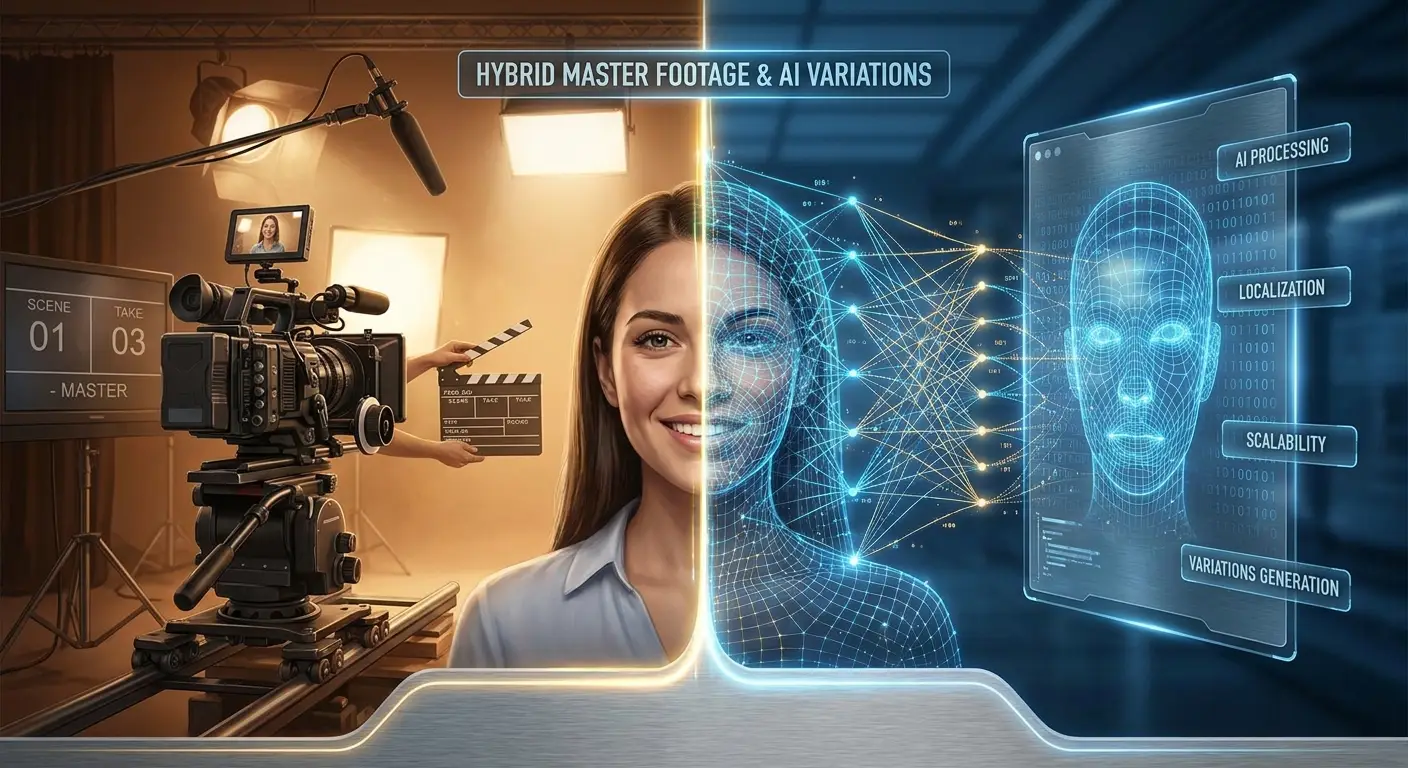
Traditional production still performs better when a project depends on an original performance, natural interaction, complex movement, or a distinctive creative vision. It also offers greater control when subtle emotions and physical details matter. In many professional workflows, the strongest solution is a hybrid approach: use traditional filming to create an authentic master video, then use AI tools to produce carefully reviewed variations.
What Are the Limitations of AI Video Face Swap?
AI video face swap can simplify production, but the quality and legality of the final video depend on the footage, editing process, intended use, and people involved.
Lighting consistency: Face swap results are highly sensitive to lighting conditions. If the source face and the target video do not match in brightness, shadows, or color tone, the final result may look unnatural or visually disconnected. Inconsistent lighting can also create noticeable flickering across frames.
Fast motion: Rapid head turns, motion blur, and sudden camera movement can reduce tracking accuracy. As a result, the swapped face may shift, stretch, or temporarily lose alignment, which can weaken the professional quality of the video.
Profile angles: Most face swap tools perform best when the face is clearly visible from the front. Extreme side angles provide less facial data, making distortion, identity inconsistency, or unnatural rendering more likely.
Occlusion: Objects such as hair, hands, glasses, microphones, or masks can partially block the face and make replacement more difficult. In these cases, the AI may struggle to maintain realistic layering and depth throughout the scene.
Source image quality: The quality of the output depends heavily on the quality of the source image. Blurry, compressed, filtered, or low-resolution inputs provide limited facial detail, while clear, well-lit images with visible features generally produce more realistic results.
Legal restrictions: The use of face swap technology may be subject to privacy laws, biometric data rules, publicity rights, advertising standards, and digital impersonation regulations. These legal requirements vary by country, so businesses should review local laws before using another person’s face in commercial or public-facing content.
Consent: Clear approval from all relevant individuals is essential. Both the person whose face is being used and the person appearing in the original footage should understand and agree to how the final content will be created, distributed, and used. Written consent should define the purpose, platforms, regions, and duration of use.
Disclosure requirements: In some contexts, audiences may need to be informed that a video has been digitally altered. This is especially important in advertising, journalism, education, and public communication. Regulations such as the EU AI Act may require transparency for certain AI-generated or manipulated media, including deepfake-related content.
How to Get the Best Results with AI Video Face Swap
The best results usually come from treating AI face swap as part of a controlled content workflow, not as a one-click shortcut. Organizations that use it well typically begin with a strong master video, clear permissions, and a narrow production goal such as localization, presenter adaptation, or versioning approved content.
Start with high-quality source footage
Good lighting, clear facial visibility, steady framing, and clean resolution make a major difference. The better the original footage, the more natural and reliable the final result will be.
Use it for adaptation, not for repair
Face swap works best when the underlying video is already accurate and professionally produced. If the script, visuals, or demo are outdated, fix those elements first before creating new versions.
Define consent and approval rules early
Before production begins, confirm who has approved the use of their face, voice, and likeness, where the content will appear, and whether disclosure is required. This avoids confusion later in distribution.
Keep human review in the loop
Every output should be reviewed for visual quality, lip-sync accuracy, translation quality, brand fit, and factual correctness. This is especially important for healthcare, training, compliance, and executive messaging.
Choose use cases with clear ROI
The strongest business cases are usually high-volume adaptation tasks: multilingual campaigns, regional training, internal communications, and personalized outreach. These are the areas where reduced reshoots can create measurable efficiency gains.
Be transparent when context requires it
If viewers could misunderstand how a video was produced, clear disclosure helps protect trust. Transparency is particularly important in journalism, education, public communication, and sensitive brand environments.
Practical Rule of Thumb
If the goal is to create many approved versions of the same core message, AI video face swap can be highly effective. If the goal is to replace creative direction, factual review, legal clearance, or stakeholder approval, it is the wrong tool.
The Future of AI Video: From Novelty to Enterprise Workflow
The next phase of AI video face swap will be defined by integration, not experimentation. As tools from industry leaders like NVIDIA, Microsoft, and Adobe converge, we are moving away from isolated “fun” features toward unified, enterprise-grade production ecosystems. For B2B organizations, this evolution represents a fundamental shift in how video assets are managed, scaled, and distributed.
1. Integration: The Rise of Unified Production Pipelines
The future lies in the centralization of the video production lifecycle. Rather than managing disparate tools for translation, lip-syncing, dubbing, and facial adaptation, businesses will increasingly rely on cohesive, end-to-end platforms.
Operational Efficiency: NVIDIA’s 2026 media tools are already demonstrating the potential for live broadcast workflows that integrate translation, audio, and graphics.
Scalability: Face adaptation is transitioning from a standalone post-production task into a standard component of this pipeline, allowing brands to maintain a consistent presenter presence across multiple regional markets with minimal latency.
2. Scalable Presence via Digital Avatars
Companies are moving toward the adoption of authorized digital presenters. As enterprise avatar and synthetic-video platforms improve, businesses are beginning to explore these presenters for recurring, highly structured content.
The Strategic Value: This approach allows for rapid content refreshing without the logistical burden of booking studios or actors for every update.
The Human Limitation: It is critical to recognize that while these tools optimize efficiency, they are designed to supplement, not replace, human instructors and subject matter experts where emotional nuance and authentic credibility are paramount to the brand.
3. Operationalizing Governance & Brand Safety
As AI-driven content becomes a staple of enterprise marketing, the technical “how-to” will matter less than the “governance-how-to.” The realistic future for B2B video production is not total automation, but rather a hybrid model of AI-accelerated human collaboration.
To successfully integrate these workflows, organizations must prioritize:
Audit Trails: Implementing rigid consent records and access controls to ensure every digital asset is documented and authorized.
Transparency as Strategy: Proactive disclosure (as highlighted by the EU AI Act) will shift from a compliance burden to a trust-building mechanism. Transparently labeling AI-altered content protects brand equity and reinforces customer trust.
Human-in-the-Loop: Automated workflows will still require human verification to catch cultural context errors, translation nuances, and tracking inconsistencies that AI cannot yet solve autonomously.
Conclusion
AI video face swap is steadily moving beyond viral trends and becoming a practical production technology for marketing, education, healthcare communication, employee training, SaaS tutorials, and media projects. Its greatest value is not simply changing a face on screen. It can help teams reduce repeated filming, localize approved content for different markets, create more video variations, and protect vulnerable identities when anonymity is necessary. Used responsibly, it gives businesses a more flexible way to meet growing content demands without rebuilding every project from the beginning.
The technology still works best alongside professional editing, human review, informed consent, and transparent disclosure. Organizations that follow these principles can benefit from faster and more scalable production without sacrificing trust. To see how this approach could fit into your own workflow, explore Betatum’s AI Video Face Swap tool and start creating professional, ethical, and high-quality video content with greater flexibility.