AI Face Swap vs Manual Editing: What’s Better?
By Maria · 2026-06-29
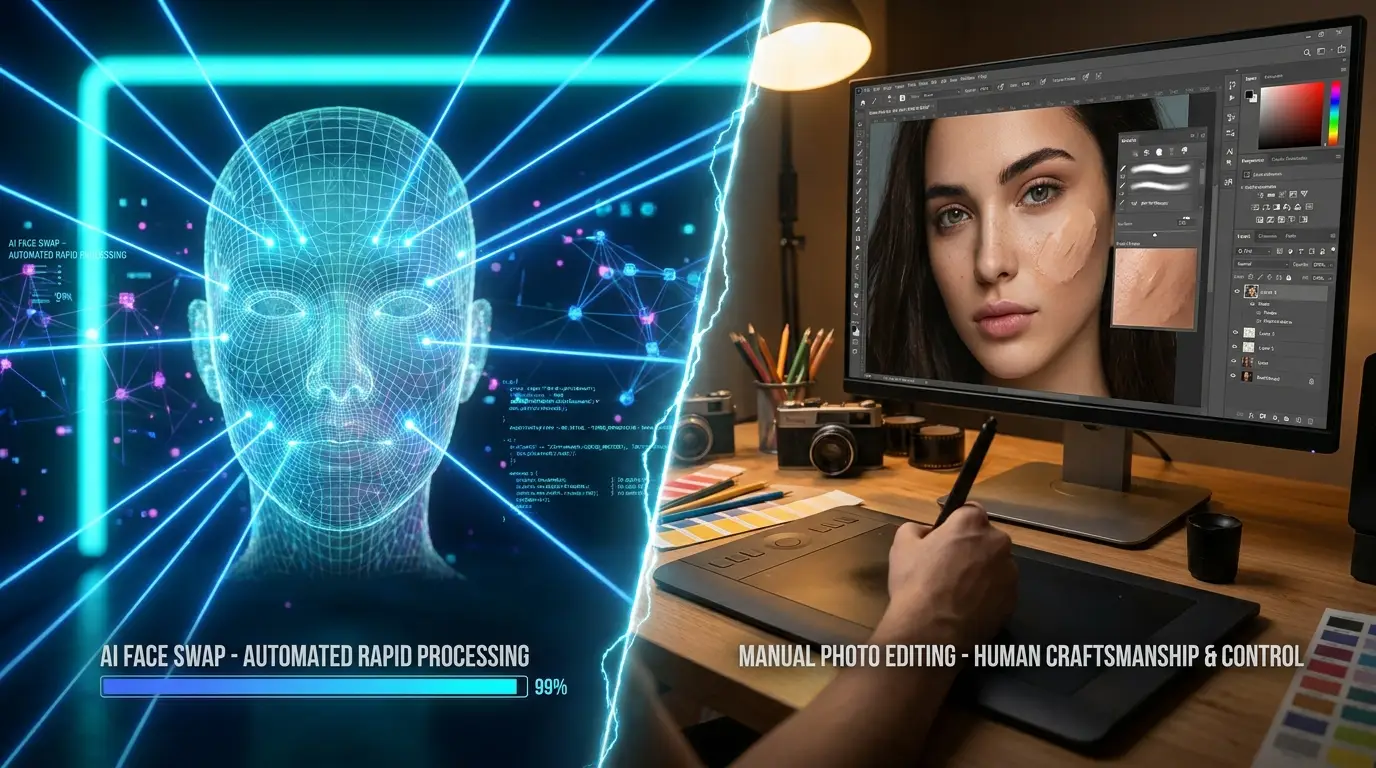
In 2026, comparing AI Face Swap and manual editing is essential for achieving the right balance between speed and quality in digital photo editing. AI tools offer fast, automated face replacement with high efficiency, making them ideal for quick content creation and everyday use. In contrast, manual editing delivers superior precision, creative control, and more realistic, high-end results. This guide explores both methods based on speed, realism, cost, flexibility, and usability. It helps creators, designers, and marketers choose the right approach for either fast workflows or professional-grade editing.
Face swap technology has rapidly transformed the way images are created and edited, making it possible to replace faces in photos with striking realism in just seconds using modern AI tools. As artificial intelligence continues to evolve in photo manipulation, tasks that once required advanced Photoshop skills and hours of manual work can now be completed almost instantly through an AI face swap tool. This shift has made the debate between AI photo editing vs traditional editing more relevant than ever in 2026, especially for creators, marketers, and everyday users trying to choose the most efficient workflow.
Understanding the difference between AI face swap and Photoshop editing is no longer just a technical discussion—it directly impacts quality, speed, and creative control. In this guide, you’ll discover how both approaches work, their strengths and limitations, and which method is the best fit depending on your editing goals, whether you’re aiming for realism, efficiency, or full artistic control.
summary
AI face swap technology has changed the way people create and edit images, but traditional manual editing still offers unmatched precision and control. In this guide, we’ll break down the key differences between AI face swap and manual editing to help you decide which method fits your needs.
You’ll discover how both methods work, which one delivers more realistic results, the advantages and disadvantages of each approach, and when to choose AI, manual editing, or a combination of both for the best outcome.
What Is AI Face Swap?
AI face swap is a modern image editing technique that uses artificial intelligence to replace one person’s face with another in a photo or video while maintaining natural lighting, angles, and facial expressions. At its core, an AI face swap tool relies on deep learning and neural networks that are trained on thousands or even millions of facial images to understand facial structure, skin tone, and motion patterns.
These models then map key facial landmarks and blend the new face seamlessly into the target image, producing highly realistic results with minimal manual input. Platforms like Betatum AI and other AI-powered editing tools have made this technology widely accessible, allowing users to perform complex face replacement tasks in seconds. Today, AI face swapping is commonly used in social media content creation, digital marketing campaigns, entertainment industries, and even meme generation, where speed, creativity, and visual impact are more important than traditional editing precision.
What Is Manual Photo Editing?
Manual photo editing refers to the traditional process of altering or enhancing images using professional software such as Adobe Photoshop, where every adjustment is performed by hand rather than generated by artificial intelligence. Unlike an AI face swap tool , manual editing relies on the editor’s technical skills and attention to detail to achieve realistic results. The process of manual face replacement typically involves selecting and isolating the face, carefully aligning it with the target image, adjusting lighting, shadows, skin tones, and texture, and then blending edges to ensure the final result looks natural and consistent.
This step-by-step workflow can be time-consuming and requires a strong understanding of photo manipulation techniques, anatomy, and digital retouching. Professional editors must also be skilled in using layers, masks, and color correction tools, as even small mistakes can make the edit look unnatural. As a result, manual editing remains a highly respected craft in the creative industry, especially when precision and full artistic control are required.
AI Face Swap vs Manual Editing (Core Differences)
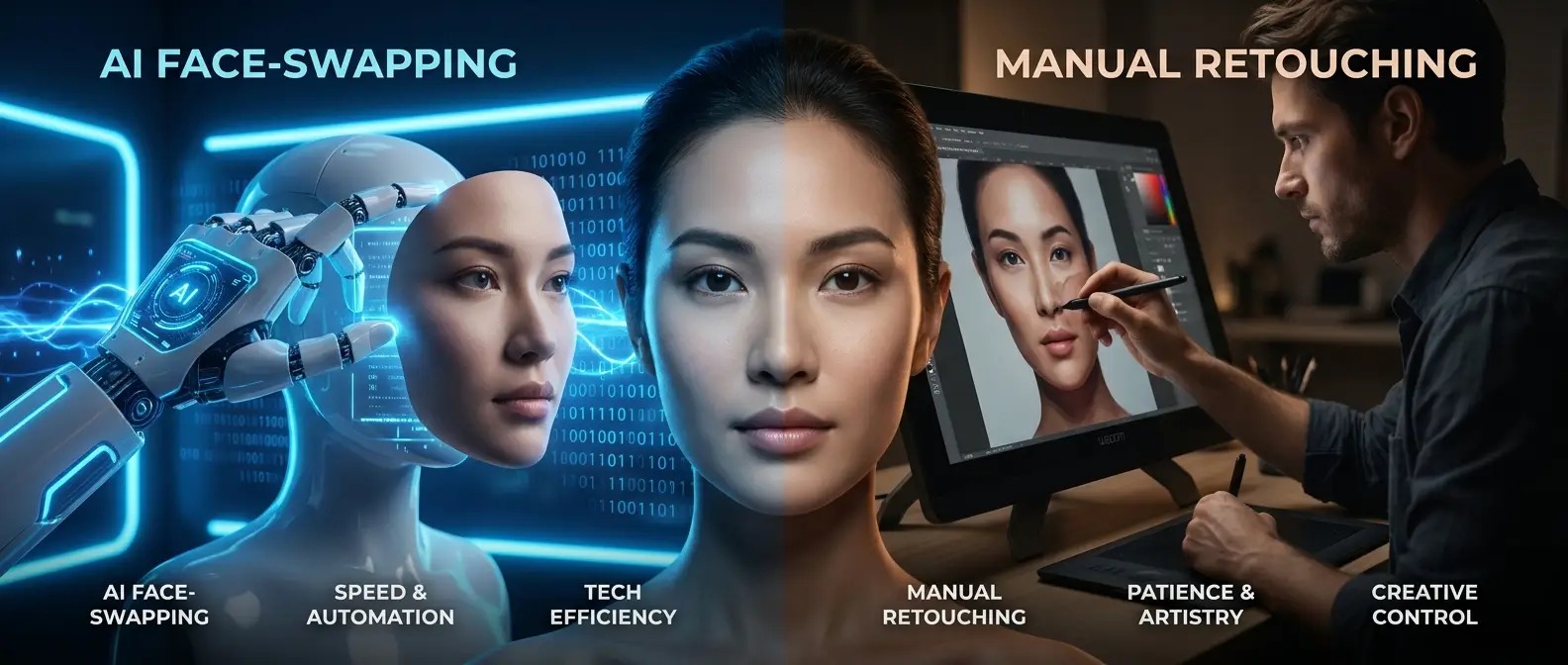
When comparing AI photo editing vs traditional editing, the biggest differences come down to speed, control, cost, and realism. AI tools automate most of the process, while manual editing depends entirely on human skill and precision. This photo manipulation comparison shows how AI and traditional editing differ in efficiency, realism, flexibility, and creative control. Below, we break down the key differences so you can clearly understand which method fits your needs.
Speed and Efficiency Comparison
AI face swap tools process images in seconds, making them ideal for fast content creation and bulk editing. Manual editing, on the other hand, can take anywhere from minutes to several hours depending on complexity, since every detail must be adjusted by hand.
Quality and Realism Comparison
Modern AI face swap technology can produce highly realistic results, especially for standard lighting and angles. However, manual editing often delivers superior realism in complex cases because editors can fine-tune shadows, textures, and imperfections with full control.
Flexibility and Creative Control
Manual editing offers maximum creative freedom, allowing artists to reshape, refine, and stylize images beyond simple face replacement technology. AI tools are improving, but they still operate within preset model limitations, which can restrict advanced customization.
Learning Curve and Accessibility
AI tools are beginner-friendly and require little to no technical knowledge, making them accessible to almost anyone. Manual photo editing techniques require significant training in software like Photoshop, along with practice and experience to achieve professional results.
Cost Comparison (Tools vs Professional Labor)
AI face swap tools are usually affordable or subscription-based, making them cost-effective for casual users and marketers. Professional manual editing, however, can be expensive due to the time and expertise required from skilled designers and retouchers.
Advantages & Disadvantages of AI Face Swap
AI face swap technology offers a powerful mix of speed and convenience, making it a popular choice for modern digital creators. However, like any technology, it also comes with certain limitations that users should understand before relying on it for professional work. Below is a clear breakdown of both its benefits and drawbacks.
Advantages
AI face swap tools are designed to simplify editing workflows and deliver fast, scalable results. They are especially useful for creators who prioritize efficiency and volume over manual precision.
Instant results in seconds
AI systems generate realistic face swaps almost immediately, eliminating the need for long editing sessions or complex manual adjustments.
No technical skills required
Users don’t need experience in Photoshop or photo manipulation techniques, making the technology accessible to beginners and non-designers.
Scalable for bulk content creation
AI tools can process multiple images quickly, making them ideal for marketing campaigns, agencies, and content production at scale.
Ideal for social media creators
Influencers and content creators can easily produce engaging visuals for platforms like Instagram, TikTok, and YouTube without heavy editing work.
Disadvantages
Despite its convenience, AI-based face replacement technology still has limitations that can affect accuracy and creative flexibility.
Lack of precision in complex images
AI may struggle with challenging angles, poor lighting, or partially obscured faces, leading to less accurate results.
Unrealistic artifacts in certain cases
Some outputs may contain visual glitches such as mismatched skin tones, blurry edges, or distorted facial features.
Limited creative control
Unlike manual editing, AI tools offer fewer customization options for fine-tuning details like shadows, textures, and composition.
Ethical and authenticity concerns
The ability to easily manipulate faces raises questions about consent, misuse, and the authenticity of digital content.
Advantages & Disadvantages of Manual Editing
Manual photo editing remains the preferred choice for professionals who need maximum accuracy, creative freedom, and complete control over every detail of an image. While it requires more time and expertise than an AI face swap tool, it often delivers the highest-quality results for complex editing projects. Understanding both its strengths and limitations can help determine whether it is the right approach for your needs.
Advantages
Manual editing gives artists and designers the ability to refine every aspect of a photo, making it ideal for high-end commercial, creative, and professional work.
High Precision and Control
Editors can adjust every detail manually, from facial alignment and skin texture to shadows and color grading, ensuring a highly accurate final result.
Better Handling of Complex Lighting and Angles
Challenging scenarios such as unusual facial poses, difficult lighting conditions, reflections, and partial obstructions can be corrected more effectively through manual techniques.
Professional-Grade Output Quality
Skilled retouchers can produce exceptionally realistic edits that meet the standards required for advertising campaigns, magazines, and commercial photography.
Full Creative Flexibility
Unlike automated face replacement technology, manual editing allows complete artistic control over composition, effects, styling, and visual storytelling.
Disadvantages
Although manual editing offers superior customization, it also comes with significant drawbacks related to time, cost, and required expertise.
Time-Consuming Workflow
Complex face replacement projects can take hours to complete because every adjustment must be made manually and reviewed for accuracy.
Requires Advanced Skills
Achieving professional results demands expertise in software such as Photoshop, along with knowledge of photo manipulation, retouching, color correction, and layer masking.
Expensive for Large-Scale Projects
Hiring professional editors or dedicating in-house resources to manual editing can significantly increase production costs, especially when processing large volumes of images.
Slower Production Cycles
Because manual workflows require extensive human involvement, content creation and campaign delivery timelines are often longer compared to AI-powered solutions.
Real-World Use Cases Comparison
Both AI face swap and manual photo editing have practical applications across different industries, but the better choice depends on the purpose, required quality, and production speed. AI tools are often preferred for quick and scalable content, while manual editing remains valuable for projects that require detailed control.
For example, a social media creator who needs to produce 50 campaign images may save hours by using an AI face swap tool to quickly generate different versions of content. However, a movie studio working on a high-budget production may still prefer Photoshop-level manual editing because every detail, lighting adjustment, and facial expression requires precise control.
Use Case | AI Face Swap | Manual Photo Editing |
|---|---|---|
Social Media Content Creation | Ideal for creators who need fast, engaging visuals, trends, memes, and short-form content. AI allows quick face replacement without advanced editing skills. | Better for highly customized content, branded visuals, and creative edits where every detail needs manual adjustment. |
Advertising and Marketing Campaigns | Useful for creating multiple versions of promotional images quickly, testing different concepts, and producing personalized campaigns at scale. | Preferred for premium campaigns where brand consistency, realistic retouching, and professional image quality are critical. |
Film and Entertainment Industry | Helps with quick visual experiments, concept development, and certain digital effects workflows. | Essential for professional productions requiring advanced compositing, realistic effects, and frame-by-frame precision. |
E-commerce Product Images | Can speed up creating model variations and promotional visuals for online stores. | More suitable when product accuracy, lighting consistency, and high-end commercial presentation are required. |
Personal Use and Entertainment | Best option for casual users who want fun edits, social media posts, and creative experiments in seconds. | Better for users who want detailed customization, artistic edits, or professional-looking personal projects. |
Which One Produces More Realistic Results?
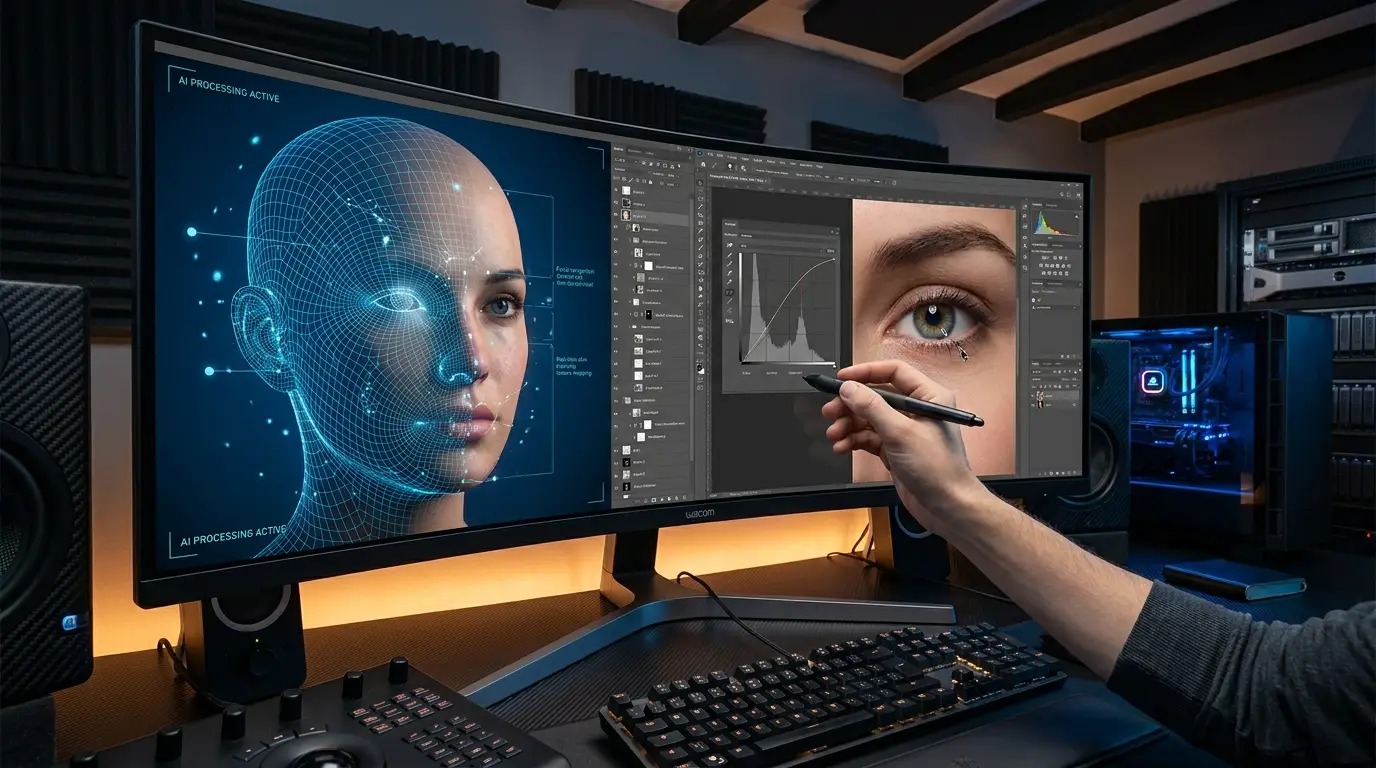
The answer depends on the image complexity, editing goal, and level of detail required. AI face swap tools can produce highly realistic results when working with clear images, similar facial angles, and standard lighting conditions because AI models can automatically match facial features, expressions, and textures. However, manual editing is often superior for challenging projects that involve complex lighting, unusual perspectives, detailed retouching, or professional-grade visual requirements where every element needs precise adjustment.
In many cases, the best approach is a hybrid workflow that combines both methods—using AI for fast face replacement and then applying manual refinement to improve blending, color accuracy, shadows, and small details. This combination often delivers the ideal balance between speed, realism, and creative control.
AI Face Swap vs Manual Editing: Which Is the Best Choice?
Choosing the best method for face replacement in photos depends on your goals, editing skills, and the type of project you are working on. If you need fast results, want to create multiple images, or do not have advanced editing experience, an AI face swap tool is usually the more practical option because it provides speed, convenience, and automation.
However, if your project requires maximum realism, detailed adjustments, or professional-level customization, manual photo editing techniques offer better control and precision. For many creators and businesses, the ideal solution is a hybrid approach—using AI for quick face replacement and manual editing for final improvements. This combination allows you to achieve high-quality results while saving time and maintaining creative flexibility.
Expert Tips for Better Results
Getting realistic results from face replacement technology depends on choosing the right workflow and paying attention to small details. Whether you use an AI face swap tool, manual photo editing techniques, or a combination of both, these expert tips can help improve quality and create more natural-looking images.
How to Improve AI Face Swap Output Quality
Use high-resolution images with clear facial visibility, similar angles, and consistent lighting for better AI accuracy. Choosing quality source images helps the AI model match facial features, skin tones, and expressions more naturally while reducing unwanted artifacts.
Professional Retouching Tricks in Manual Editing
Focus on blending edges, adjusting shadows, matching skin tones, and correcting color differences after replacing a face manually. Small refinements such as texture adjustments and realistic lighting corrections can make the final image look more authentic.
Combining Both Methods for Best Results
A hybrid approach often provides the strongest outcome by using AI for fast face replacement and manual editing for final improvements. This workflow saves time while still allowing precise control over details that affect realism and professional quality.
Critical Mistakes to Avoid in AI and Manual Face Swapping
Achieving realistic results in face swapping requires more than just using advanced tools. Small mistakes in image selection, lighting, and editing techniques can make the final result look unnatural. Avoiding these common issues will help improve the quality of both AI-generated and manually edited images.
Ignoring Lighting Consistency
Lighting differences between the original face and the target image can make the swap look unrealistic. Always ensure brightness, shadows, and color tones match so the replaced face blends naturally with the scene.
Poor Blending in Manual Editing
Rough edges, incorrect skin tones, or mismatched textures can make manual face replacements appear artificial. Professional editing requires careful masking, feathering, and color correction for a seamless result.
Using Low-Quality Source Images
Blurry, compressed, or poorly positioned images reduce accuracy and detail. High-resolution photos with clear facial features provide better results for both AI face swap tools and traditional editing workflows.
Future of Image Editing Technology
The future of image editing will likely be shaped by collaboration between artificial intelligence and human creativity rather than one completely replacing the other. While AI face swap tools and generative AI platforms are becoming more advanced, manual editing will continue to play an important role in professional projects that require precision, artistic judgment, and detailed customization. The evolution of generative AI is making photo manipulation faster, smarter, and more accessible by automating complex tasks such as face replacement, background editing, and realistic image enhancement.
In the coming years, hybrid workflows that combine AI automation with manual refinement are expected to become the standard approach, allowing creators to achieve faster production while maintaining the quality and creative control that traditional editing provides.
Conclusion
Choosing between an AI face swap tool and manual photo editing depends on your skill level, project requirements, and the level of control you need. For beginners, social media creators, and users who want fast results without technical expertise, AI face swap technology is often the more practical choice because it delivers realistic edits quickly and efficiently. For professional designers, photographers, and complex projects that require advanced customization, manual photo editing techniques still provide unmatched precision and creative flexibility. The best decision depends on the purpose: use AI for speed, scalability, and convenience; choose manual editing for accuracy, detailed control, and premium-quality results. In many cases, the strongest approach is a combination of both—using AI for the initial face replacement and manual refinement to achieve a polished, realistic final image. This balanced workflow offers the best method for face replacement in photos by combining modern automation with human creativity.